
Looking Glass Rock is one of the premier slab climbing destinations in the Southeast. Located in Pisgah National Forest just outside Brevard, North Carolina, its sweeping granite face, signature eyebrow features, and wide range of grades make it a must-visit crag for climbers of every level. Whether you're leading your first trad pitch or hunting a technical test piece, Looking Glass delivers.
Here are ten of the best slab climbs on the rock — from mellow single-pitch warm-ups to sustained multi-pitch adventures — curated by our AMGA guide team at Pisgah Climbing School.
1. The Nose — 5.8 | Trad | The Nose Area
Gear: Doubles .3–#1 | Optional: Triples .4–.75
The Nose is arguably the most iconic multi-pitch climb in North Carolina, and it earns that reputation. Stretching nearly 500 feet across four pitches of moderate slab, the route winds through Looking Glass's classic eyebrow features on a line that feels adventurous but accessible. Bolted belay anchors on every pitch make it a welcoming objective for teams building their multi-pitch experience.
Gear placements are abundant throughout, though extra attention should be paid leaving the pitch two and three belays — both are ledges that require thoughtful management. The Nose sees traffic year-round and is climbable on all but the coldest days.
For a detailed pitch-by-pitch breakdown, check out our blog by PCS Lead Guide Anna Marie Alewine on The Nose.
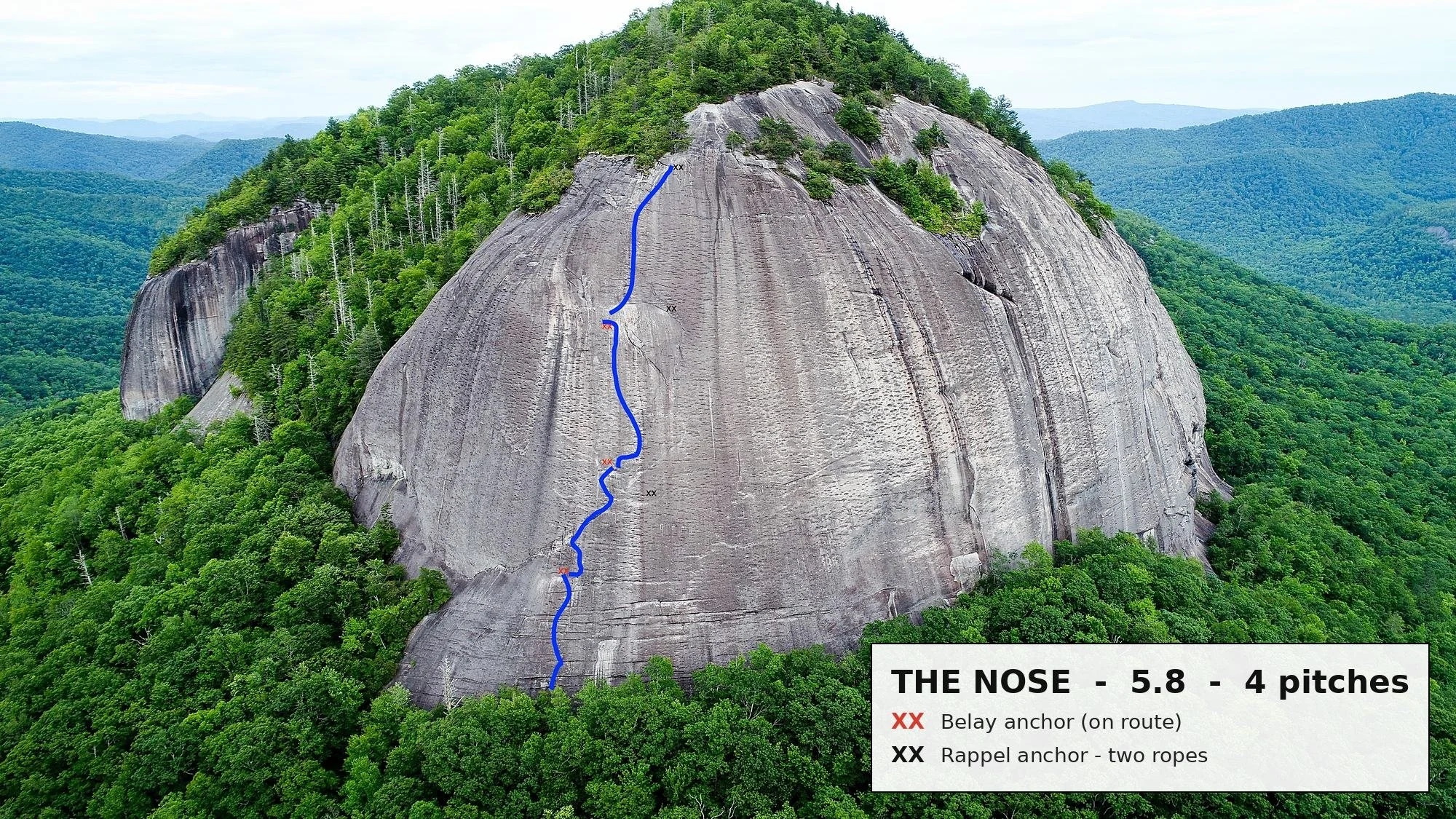
The Nose — 5.8, four pitches, roughly 500 feet on Looking Glass Rock. Red anchors are belays on route. Black anchors are rappel stations and require two ropes to descend.
2. Sundial Crack — 5.8 | Trad | The Nose Area
Gear: Doubles .3–#3 | Optional: Triples .4–.75
Sundial Crack is a four-pitch classic that ascends the face directly above the approach trail, making it easy to spot and orient to from the base. Pitch two features a long eyebrow traverse — one of the more memorable sequences on the entire rock — before turning upward into a 25-foot hand crack that gives the route its name.
Gear is plentiful throughout, but leaders should take care to protect the wandering horizontal placements on pitch one. The first two pitches feature bolted belays; upper pitches transition to gear anchors. The route tops out near pitch four of The Nose, which is commonly used for descent alongside the Peregrine anchors.
3. Lichen or Not — 5.5 | Trad | The South Side
Gear: Doubles .3–#2 | Optional: Triples .5 and .75
This 100-foot slab is a perfect introduction to the South Side of Looking Glass. Beginning in a right-leaning crack, the route transitions into eyebrows that lead to a bolted belay with a spectacular view of Pisgah National Forest. A second pitch continues to the trees, though most parties are satisfied with the single pitch and the scenery.
Lichen or Not tends to stay wet through winter and spring due to seepage, so plan on climbing it in summer or fall for the best conditions. Well-protected and moderate, it's an ideal warm-up before tackling harder South Side routes.
4. Dinkus Dog — 5.10a/b | Trad | The South Side
Gear: Doubles .3–#2 | Optional: Triples .4–.75
Dinkus Dog climbs a steep, eyebrow-studded face accessed via a short third-class scramble toward the north end of the South Side. The steepness of the wall actually works in climbers' favor — it keeps the gear placements solid and the climbing secure, even as the holds become more spaced.
Most parties break the route into two pitches with a hanging belay in a large eyebrow about halfway up (hand-size cams, .75–#2). Stronger teams sometimes link both pitches into a single 60-meter mega-pitch up to the two-bolt anchor. This route shines on cold, dry days when friction is at its best. Note: Two 60-meter ropes (or equivalent) are required for the descent.
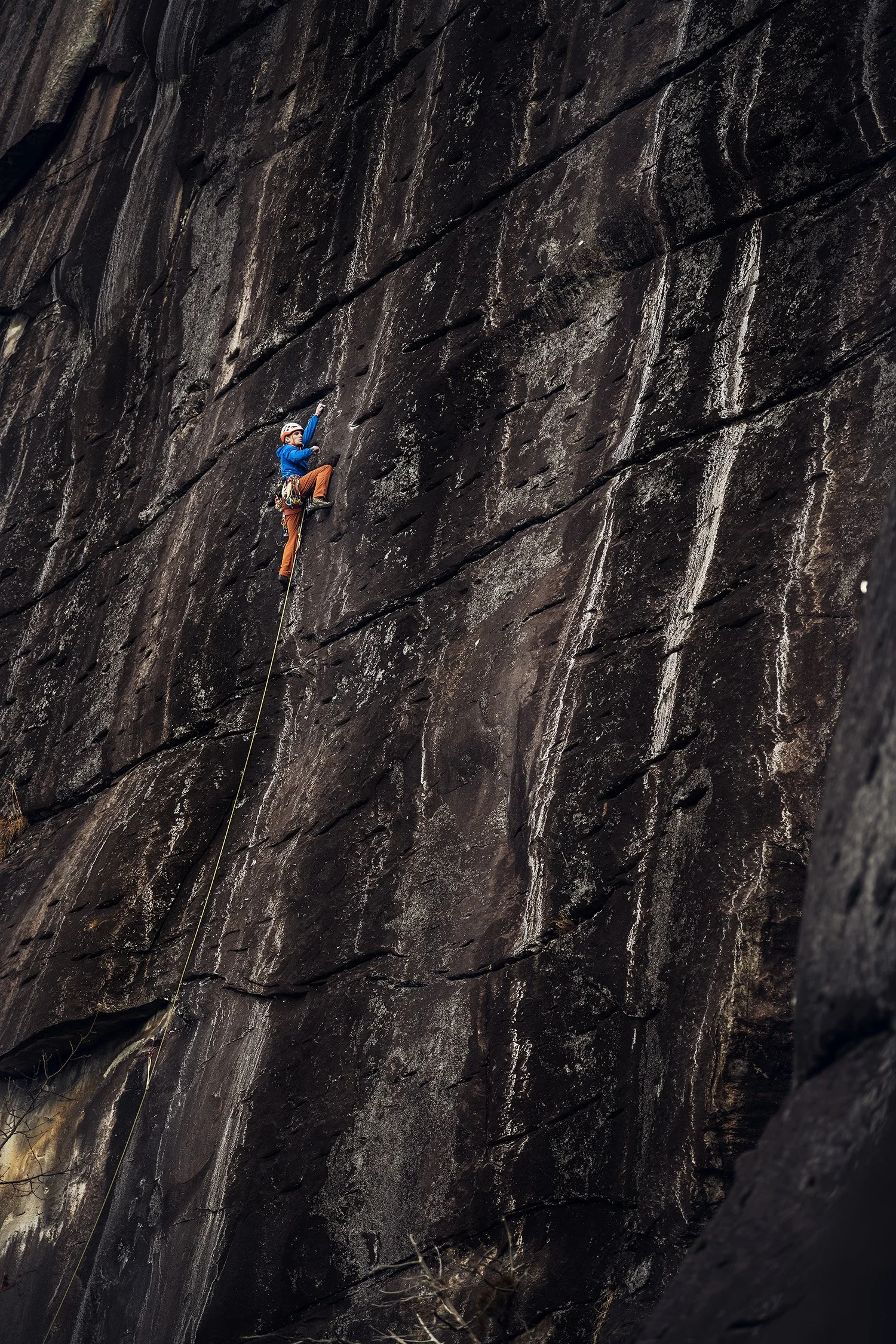
PCS guide Alex Cobb on Dinkus Dog, 5.10, Looking Glass Rock. Photo: Bryan Miller / Fixed Line Media
5. Good Intentions — 5.6 | Trad | The South Side
Gear: Doubles .3–#2 | Optional: .2, Triples .4–.75
Good Intentions climbs steep eyebrows and featured rock up a clean slab face. The crux arrives mid-route with small feet and narrow eyebrow holds — a great opportunity to dial in precise footwork. Some parties split the climb into two pitches with a belay just past the crux on hand-size cams (.75 and #1).
The two-bolt anchor atop the route sits on a large ledge climber's right of the tree island and is shared with the neighboring route Left Up. Good Intentions is one of the first South Side routes to dry after rain, making it a great option when conditions are marginal. Build up to it after climbing Weather or Not, Lichen or Not, and Short Man's Sorrow.
6. Short Man's Sorrow — 5.5 | Trad | The South Side
Gear: Doubles .3–#2 | Optional: Triples .5 and .75
Short Man's Sorrow stands out among South Side routes for its scooped holds — a texture less common on Looking Glass and genuinely fun to climb. Protection is abundant throughout, making it one of the best routes on the rock for practicing gear placement or completing an early traditional lead.
Leaders can build a trad anchor in eyebrows just before Stage Ledge (.5–#2) or atop the ledge in surrounding cracks (#1 and #2). The route can also be set up as a top rope by scrambling a low fifth-class gully climber's right, which doubles as a descent option. A large tree climber's right of that gully also accepts a rappel anchor.
7. Weather or Not — 5.5 | Trad | The South Side
Gear: Doubles .3–#1
Weather or Not follows a small crack system that opens into eyebrows near the top of the route. The climbing is straightforward and well-protected after the first twenty feet — leaders should be comfortable committing to easy ground off the deck before finding the first piece. The route finishes at a two-bolt anchor with a sweeping view of the surrounding Pisgah landscape.
Like Lichen or Not, this route tends to stay wet in cooler months; summer and fall are the prime seasons. A great introductory lead for climbers new to gear climbing or South Side slab.
8. The Legacy — 5.10d | Mixed | The South Side
First Ascent: Karsten Delap
Gear: Quickdraws, Doubles .3–.75
The Legacy is a Looking Glass test piece — precise, demanding, and rewarding for climbers with a well-developed slab vocabulary. First climbed and equipped by Pisgah Climbing School owner Karsten Delap, the route begins on Sentry Box Ledge (accessed via a low fifth-class crack pitch from the ground) and follows thin crimps through two bolts before transitioning to trad terrain.
The crux arrives just past bolt two, where the wall steepens and holds space out — protected well by cams in the .3–.5 range. After pulling over the bulge, the angle relents into a fun, well-protected finish to the anchors. Leaders should consider anchoring their belayer before leaving Sentry Box Ledge. Best conditions are on cold, dry days.
Local beta: The start of Gemini Crack sits just right of the route and provides a more approachable entry to reach the first bolt for those new to the climb or to North Carolina slab climbing.
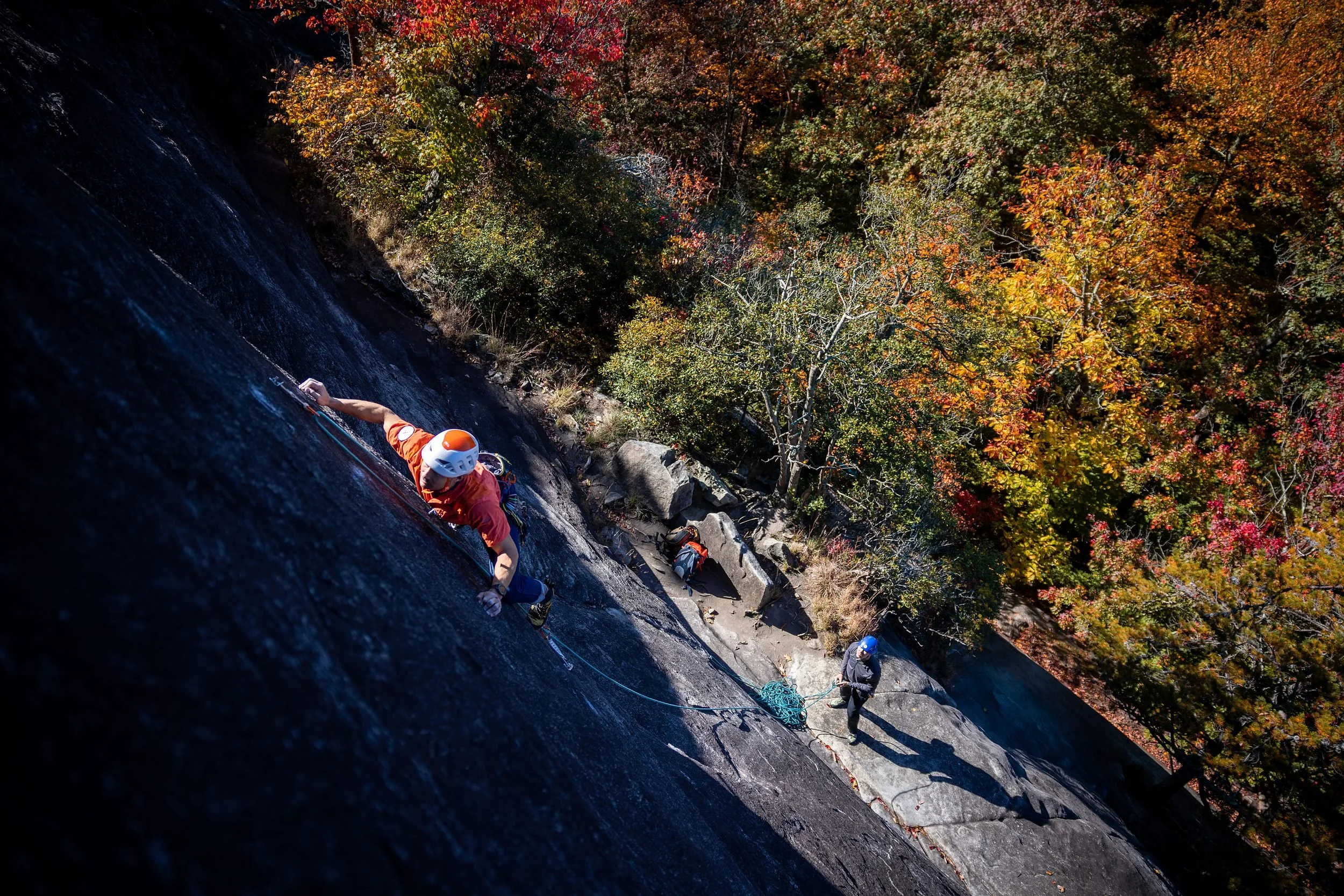
Karsten Delap on Legacy, Looking Glass Rock. Photo: Bryan Miller / Fixed Line Media
9. Twist of Fate — 5.7 | Trad | Fate Osteen Wall
Gear: Doubles .3–#2
Worth every step of the approach. Twist of Fate's first pitch climbs through cool slash features before a fun crux move — a great .5 cam placement here — leads to a two-bolt anchor on a small ledge. Pitch two ascends steepening terrain on excellent eyebrows, finishing at another two-bolt anchor just over the top of the headwall.
The entire route can be rappelled with a single rope using the same anchor stations, making it a clean and efficient objective. Well-protected and engaging at the grade, Twist of Fate is a standout multi-pitch introduction for climbers stepping into the 5.7 range and/or North Carolina slab for the first time.
10. Wrench in My Pocket — 5.11a | Mixed | The Nose Area
First Ascent: Karsten Delap
Gear: Quickdraws, Single .5
Another Karsten Delap first ascent, Wrench in My Pocket is a newer slab route that will humble even seasoned climbers. Despite its many bolts, this is not a sport climb in spirit — significant runouts mean air time is a real possibility, and the sustained technical climbing demands precision from bottom to top.
A .5 cam between bolts two and three tames the most consequential runout. The difficulty builds to a heartbreaker crux just below the anchors, where composure and technique separate a send from a fall. Bring your A-game, your patience, and a cool head. Best climbed on cold, dry days when friction peaks.
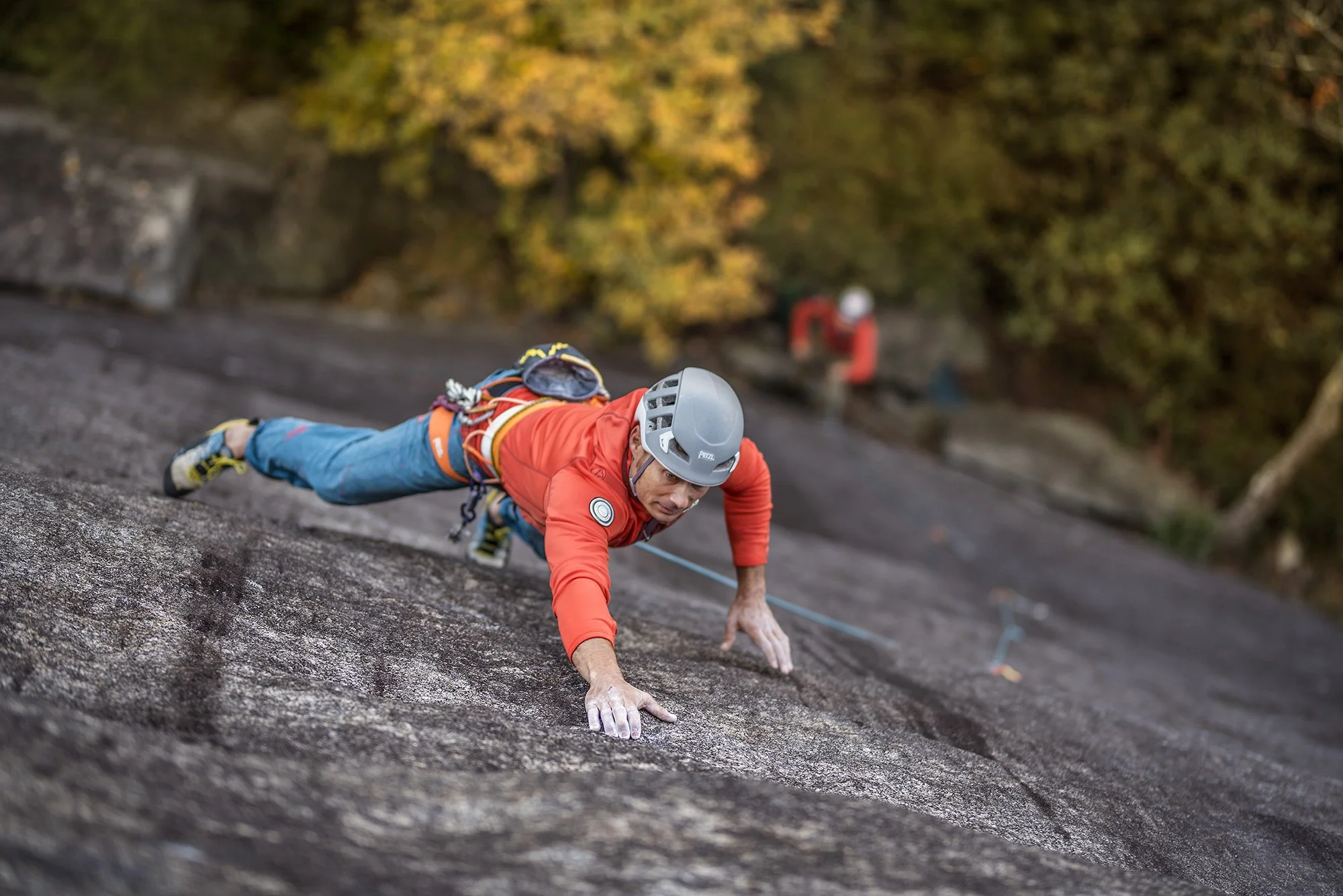
Karsten climbing up the thin moves on Wrench in My Pocket. Photo Bryan Miller / Fixed Line Media
Plan Your Day at Looking Glass Rock
Looking Glass is one of the most rewarding crags in the Southeast, but it rewards preparation. Route-finding, gear selection, and anchor-building skills all matter here — especially on the multi-pitch lines and mixed routes.
Not sure where to start? The guides at Pisgah Climbing School lead trips to Looking Glass year-round. Whether you're looking to climb your first trad pitch, tick a hard slab project, or build the anchor skills to climb independently, we can put together the right day for you.
Book a guided climb at Looking Glass →
Zack Mintz is an AMGA Assistant Rock Guide and instructor with Pisgah Climbing School in Brevard, North Carolina, specializing in single-pitch and multi-pitch instruction across Pisgah National Forest.