PCS Climbing Location
Looking Glass Rock
What to Expect
Location: Pisgah National Forest, near Brevard, NC
Climbing Type: Single Pitch & Multi-Pitch Trad, Aid Climbing | Beginner to Advanced
Experience Level: All levels
Grade Range: 5.6 – 5.12+
Rock Type: Granite (Whiteside Pluton)
Summit Elevation: 3,969 ft
Approach: 15–30 minutes depending on area
Distance from Brevard: ~15 minutes
Distance from Asheville: ~40 minutes
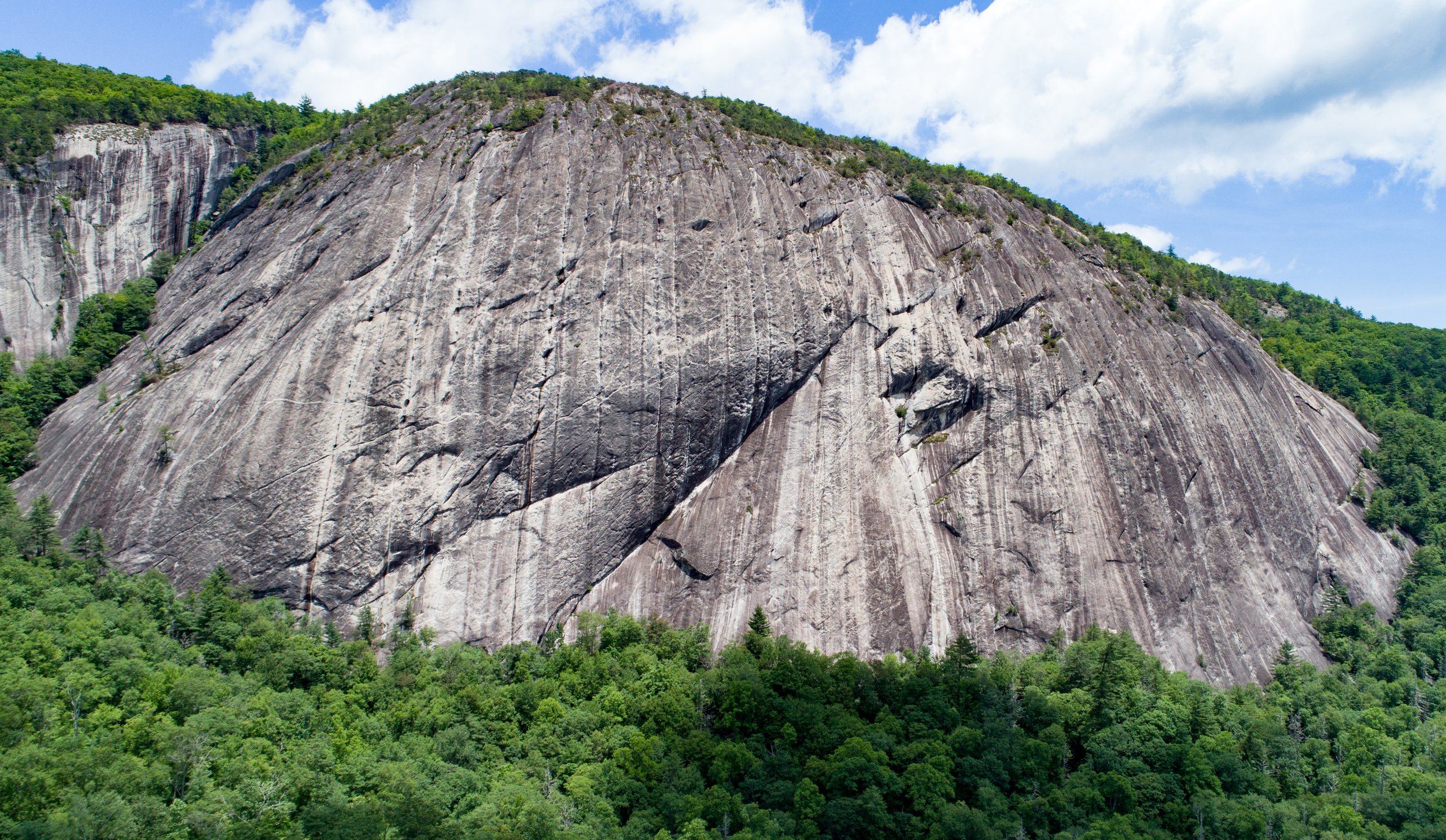
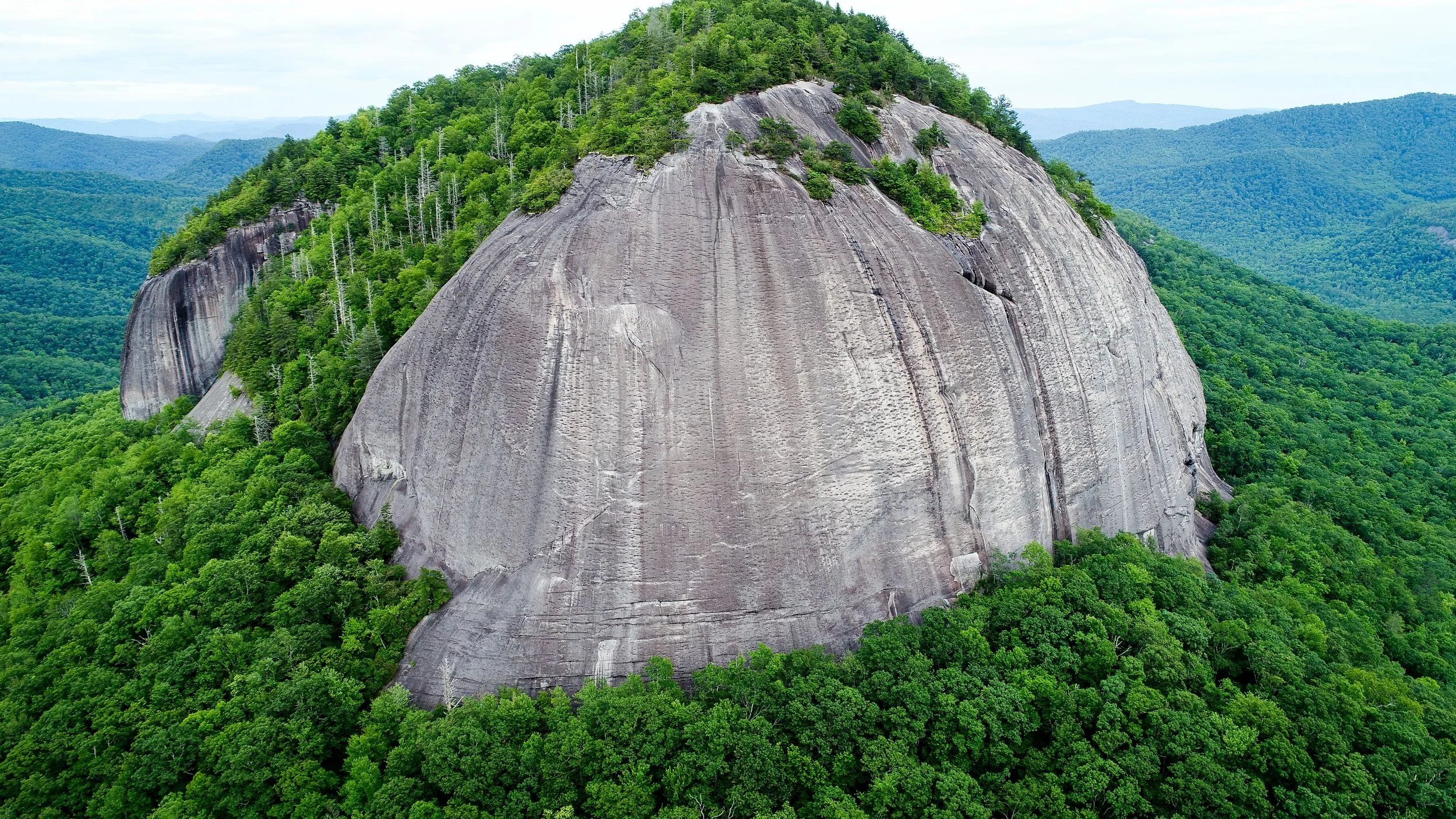
Looking Glass Rock is the most iconic climbing destination in the Southeastern United States — a massive granite dome rising nearly 1,000 feet from the floor of Pisgah National Forest, just 20 minutes from Brevard, NC, and 45 minutes from Asheville. Named for the way its face reflects like a mirror after rain freezes on the surface, Looking Glass has defined climbing in the Southeast for over half a century. It is Pisgah Climbing School's home mountain — the single venue that best represents everything this region has to offer.
The rock hosts six distinct climbing areas: the South Face, Nose Area, Sun Wall, North Face, Hidden Wall, and Invisible Wall. Together they offer hundreds of routes spanning every grade and style imaginable. Whether you are stepping outside onto real rock for the first time or pursuing committing multi-pitch trad lines hundreds of feet off the ground, Looking Glass Rock has exactly the right route for where you are as a climber.
Climbing at Looking Glass is primarily slab climbing on trad gear — a style unique to granite domes like this one. On slab, you trust friction and balance over arm strength, reading the rock's natural features — the famous "eyebrows," water grooves, and crystal edges — to find your way upward. It is more technical and more rewarding than it looks, and our guides teach these skills clearly and progressively throughout every guided day.
Climbing Areas at Looking Glass Rock
South Face — Best for Beginners & First-Time Outdoor Climbers
The South Face is the most welcoming area on the mountain and the best starting point for anyone new to outdoor or multi-pitch climbing. Routes here run from 5.6 to 5.12 across one to three pitches of friction slab climbing. The aspect faces south and catches full sun, making the South Face an excellent destination on cold fall and winter days. The friction slab rewards patience and precise footwork over arm strength — a perfect introduction to what granite climbing is all about. Notable routes include Second Coming (5.7), a well-protected two-pitch moderate that serves as one of the finest introductions to multi-pitch trad climbing in the region.
The Nose Area — Home of North Carolina's Most Climbed Route
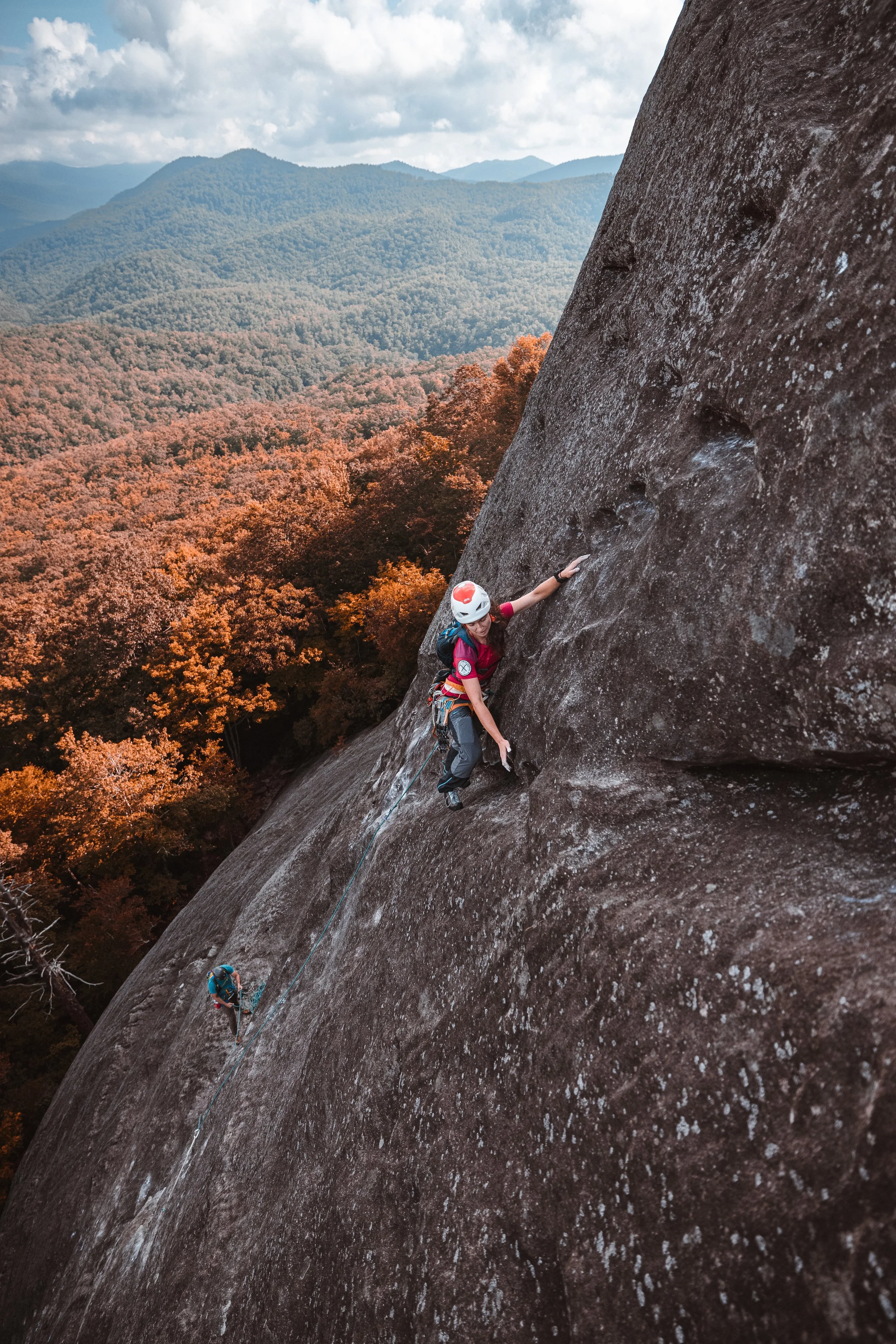
The Nose Area takes its name from the route that defined Looking Glass — The Nose (5.8), first climbed in December 1966 by Steve Longenecker, Bob Watts, and Bob Gillespie using improvised gear and hiking boots. Today it remains the most climbed multi-pitch route in North Carolina: a four-pitch, ~500-foot adventure that delivers sustained slab climbing, classic eyebrow moves, and views across Pisgah National Forest that stay with you long after you've rappelled off. The route has bolted belay stations on every pitch, making it manageable and memorable for climbers at the 5.8 level. As a side note, Karsten has logged over 200 ascents on the Nose of Looking Glass and in turn has climbed it more than any other human. The Sundial is another Nose Area classic — a striking, well-traveled line that has become a rite of passage for climbers on the mountain.
The Sun Wall — Committing Multi-Pitch for Intermediate to Advanced Climbers
The Sun Wall steps up the scale and commitment significantly, with five and six-pitch routes in the 5.9–5.12 range on one of the most beautiful walls in the Southeast. Routes here are sustained and bold, requiring confident gear placement, solid multi-pitch systems, and comfort with real exposure. T&B is the standout route on the Sun Wall — one of the most sought-after lines on the rock and a must-do for climbers ready to spend a full day on serious terrain. The Sun Wall faces southwest and catches afternoon sun.
North Face & Hidden Wall — Shaded Technical Terrain
The North Face and Hidden Wall offer the most challenging and committing climbing on Looking Glass Rock, with multi-pitch routes ranging from 5.9 to 5.12+ that involve technical edging, face climbing, and — on the North Face — some of the most serious aid climbing in the Southeast. These areas are shaded throughout most of the day, making them the best choice for summer climbing when the south-facing walls become too hot. Note: The North Face is subject to seasonal Peregrine Falcon closure, typically January 15 through August 15. Pisgah Climbing School monitors all closures and plans your guided day accordingly.
Featured Routes at Looking Glass Rock
The Nose — 5.8, Trad, 4 Pitches
The most climbed multi-pitch route in North Carolina. First ascended in December 1966, The Nose spans nearly 500 feet across four pitches of moderate granite slab. Bolted belay stations on every pitch make it accessible and secure. The route features classic eyebrow climbing, sustained friction moves, and some of the finest views in the Pisgah National Forest. If you climb one route on Looking Glass Rock, this is it. Gear: Doubles .3–#1. Optional triples .4–.75.
Second Coming — 5.7, Trad, 2 Pitches
A featured moderate on the South Face and one of the best introductions to multi-pitch trad climbing in the Southeast. Second Coming climbs well-featured granite slab with consistent protection and a classic line up the wall. Ideal for climbers taking their first steps into outdoor or multi-pitch climbing. The views from the upper belay are exceptional.
Gemini Crack
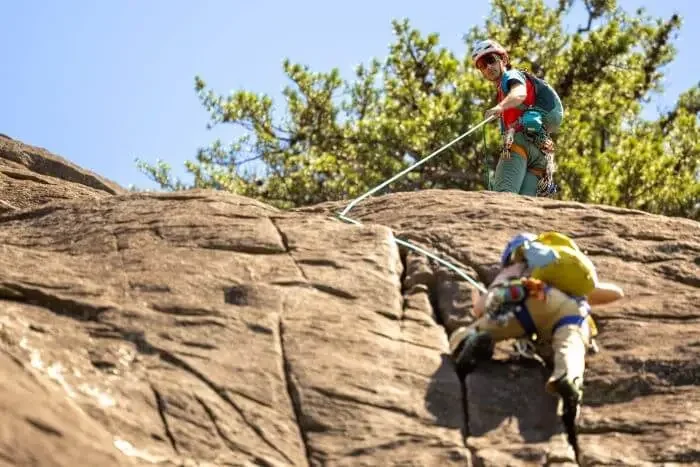
Don't miss the thought-provoking and well-protected crux of Gemini. A Looking Glass classic that tests technique and commitment in equal measure — one of those routes that stays in your memory long after the day is done.
The Seal — 5.10a, Trad
From thin cracks to balancy slab to powerful underlings, The Seal takes you through nearly every movement type that Looking Glass granite has to offer. Clean, well-featured rock and a variety of challenging sequences make this a standout route for intermediate climbers looking to push into the 5.10 grade on real terrain.
T&B — 5.9–5.10, Trad, Sun Wall
The Sun Wall's most iconic line. Sustained, committing, and beautiful — T&B is among the most sought-after routes on the mountain for climbers who are ready to commit to a full day on serious terrain. Five to six pitches of spectacular climbing with exposure and views to match.
Why Climb Looking Glass Rock with a Guide?
Looking Glass Rock looks approachable from the valley below — a smooth, broad dome with well-marked trails. Once you're on the rock, the complexity quickly reveals itself. Route-finding on a 500-foot granite slab is genuinely challenging. Descents require knowing exactly where you are. And the margin for error on smooth granite slab is smaller than most climbers expect, especially those coming from gym climbing backgrounds.
Pisgah Climbing School has guided Looking Glass Rock more than any other location in the world. Our guides know every route, every descent, every anchor, and every weather pattern that moves through this valley. More importantly, they know how to teach you to read the rock — so that your day on Looking Glass isn't just an adventure, it's an education that stays with you.
What a Guided Day Looks Like
Every guided climb is built around your group. After meeting at the trailhead, your guide leads a 15–30 minute approach hike to the base of the rock, followed by a gear overview and brief technique session. From there, your guide climbs first, placing protection and building anchors at each belay station. You climb with coaching on movement, footwork, and breathing. On a full day, most beginner groups complete two to three pitches; more experienced groups can link the full four pitches of a route like The Nose.
All safety equipment is provided by Pisgah Climbing School. You bring comfortable athletic clothing, approach shoes or hiking boots, water, snacks, and sunscreen. Climbing shoes are available to rent if you don't own a pair.
Best Conditions and Seasons for Climbing Looking Glass Rock
Fall (September–November) is the premier season. Temperatures are ideal, the rock is dry, and the surrounding hardwood forest turns brilliant color. Friction on the granite feels almost effortless in cool autumn air. This is when the mountain is at its best, and when demand for guided days is highest — book early.
Winter (December–February) is excellent on the south-facing walls. Cold, clear days with the sun hitting the South Face and Nose Area produce some of the finest climbing of the year — the rock stays dry, friction is exceptional, and the crags are quiet. Dress in layers; you'll warm up quickly once you start climbing. The North Face is subject to Peregrine Falcon closure January 15 through approximately August 15.
Spring (March–May) is wetter but increasingly popular. Rain is more frequent, and some routes take longer to dry. The North Face closure affects route options. However, spring mornings on the South Face can be spectacular, and as the season progresses conditions improve steadily.
Summer (June–August) requires planning. Heat and humidity reduce friction on south-facing walls, but the North Face and Hidden Wall remain shaded and cool. Early morning starts help. Summer is a great time for climbers targeting technical routes on shaded terrain.
Because of the rock's elevation, range of aspects, and the variety of sheltered and exposed walls, Looking Glass Rock offers good climbing conditions on the majority of days throughout the year. Pisgah Climbing School monitors conditions continuously and will always put you on the right wall for the day.
Frequently Asked Questions — Climbing Looking Glass Rock
Is Looking Glass Rock good for complete beginners with no climbing experience?
Absolutely. Looking Glass Rock has some of the best beginner routes in the Southeast on its South Face, with friction slab climbing that rewards patience and balance over arm strength. With a Pisgah Climbing School guide, first-time climbers complete full pitches on their very first day outside. No prior experience required — just a willingness to trust your feet and try something new.
Is Looking Glass Rock the same as Looking Glass Falls?
No — these are two completely separate attractions. Looking Glass Falls is a popular roadside waterfall on US 276 near Brevard. Looking Glass Rock is the massive granite dome used for rock climbing, located several miles away off Forest Road 475. Both are wonderful, but they are entirely different places. When you book a guided climb with us, we provide detailed directions to the correct trailhead for your trip.
What is slab climbing, and is it harder than other types of climbing?
Slab climbing is climbing on rock that is less than vertical — angled like a ramp rather than a wall. On slab, you rely on friction between your climbing shoe rubber and the granite, combined with precise balance and footwork, rather than pulling with your arms. Looking Glass Rock is primarily slab climbing, which surprises many gym climbers who are used to vertical or overhanging routes. Slab isn't necessarily harder, but it requires a different mindset: trusting your feet when holds feel minimal, staying relaxed, and reading the rock's subtle features. Our guides are expert slab coaches who make this click quickly for most people.
How long does a guided climb at Looking Glass take?
A half-day guided climb runs approximately 3–4 hours including the approach. A full day runs 6–8 hours and allows time for longer multi-pitch routes, more pitches, and more comprehensive instruction. We recommend full days for anyone who wants to climb The Nose or experience the full scale of what Looking Glass has to offer.
Is Looking Glass Rock good for families with kids?
It's one of our most popular family destinations. Children as young as 6–7 regularly climb beginner routes on the South Face, and the experience of completing a real climb and looking out over Pisgah National Forest from a belay ledge is genuinely unforgettable for kids of all ages. We pace every family trip to everyone's comfort level — there's no pressure, and the focus is always on fun and confidence-building.
Do I need a permit to climb Looking Glass Rock?
Private climbing parties do not need a permit to climb Looking Glass Rock. Commercial guide services like Pisgah Climbing School operate under a special use permit with Pisgah National Forest. There is no fee to access the climbing trailheads, though Leave No Trace practices are expected and trail registers should be signed where present.
What is the North Face Peregrine Falcon closure?
The North Face of Looking Glass Rock is closed to climbing annually to protect nesting Peregrine Falcons. The closure typically runs January 15 through August 15, though exact dates are confirmed each year by the US Forest Service. Routes on the South Face, Nose Area, and Sun Wall are generally not affected. Pisgah Climbing School tracks all active closures and will always plan your guided day on open terrain.
Keep Exploring
Looking Glass Rock is Pisgah Climbing School's home mountain, but the greater Western North Carolina region has world-class climbing in every direction.
Featured Routes
The Nose (5.8)
A worthy classic and one of the most popular multipitch climbs in NC (and for good reason!)
Gemini
Don't miss the thought-provoking and well-protected crux of Gemini.
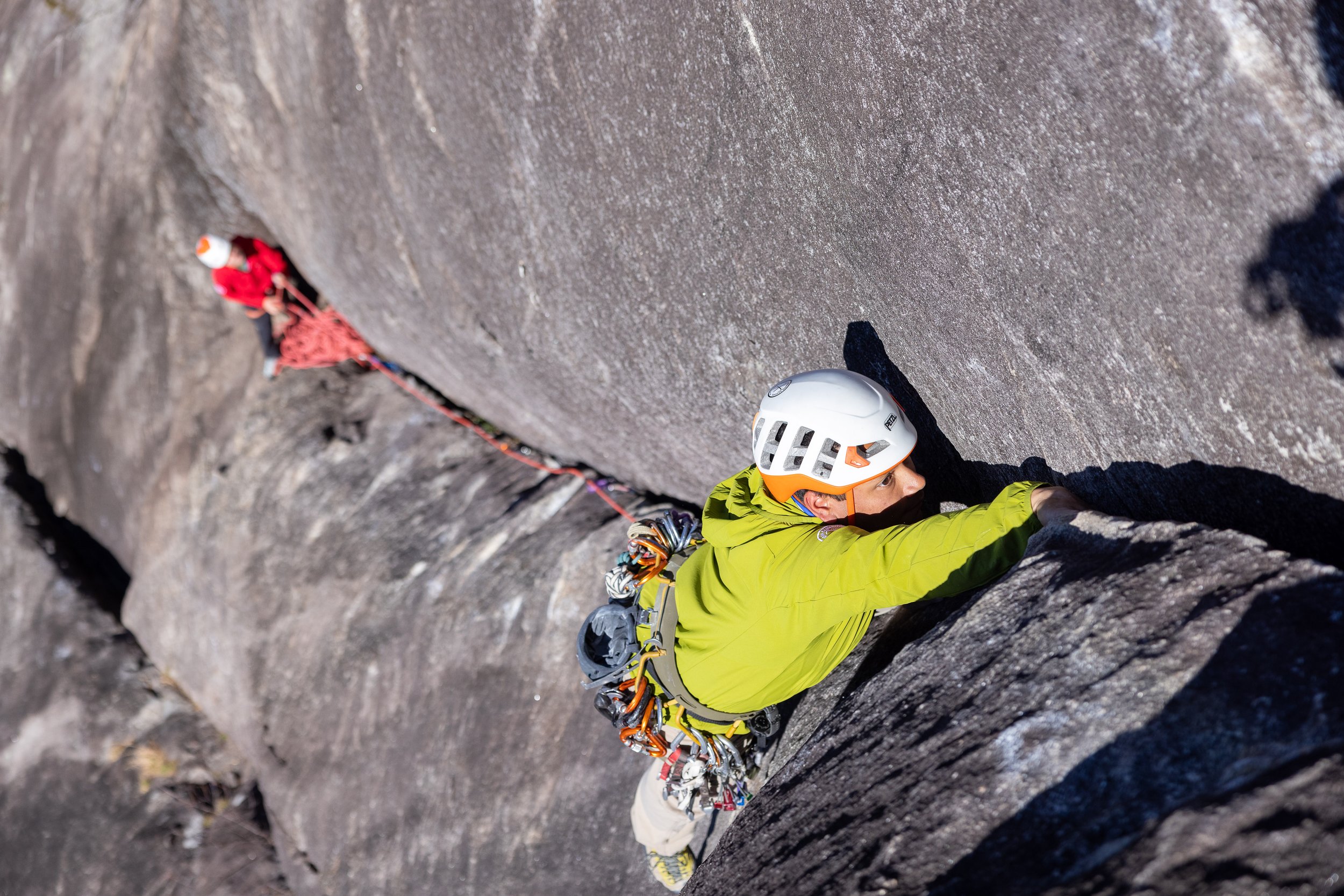
Second Coming (5.7)
A featured moderate on the South Side of Looking Glass that serves as a perfect introduction to multipitch trad climbing.
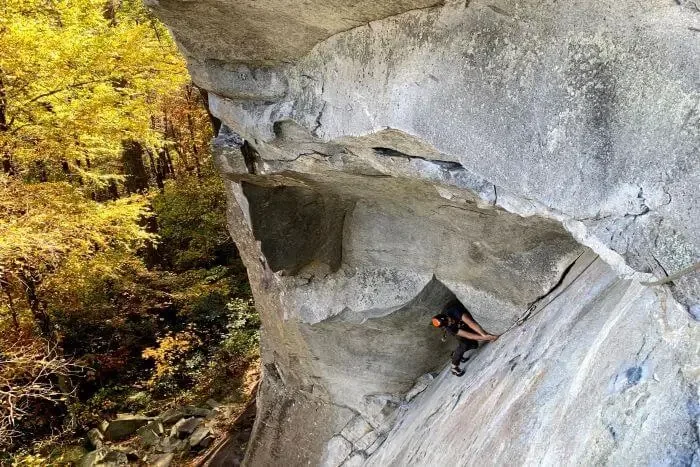
The Seal (5.10a)
From thin cracks to balancy slab to powerful undeclings, the clean granite on this climb will give you a run for your money.