
North Carolina Ice Climbing: Where, When and How
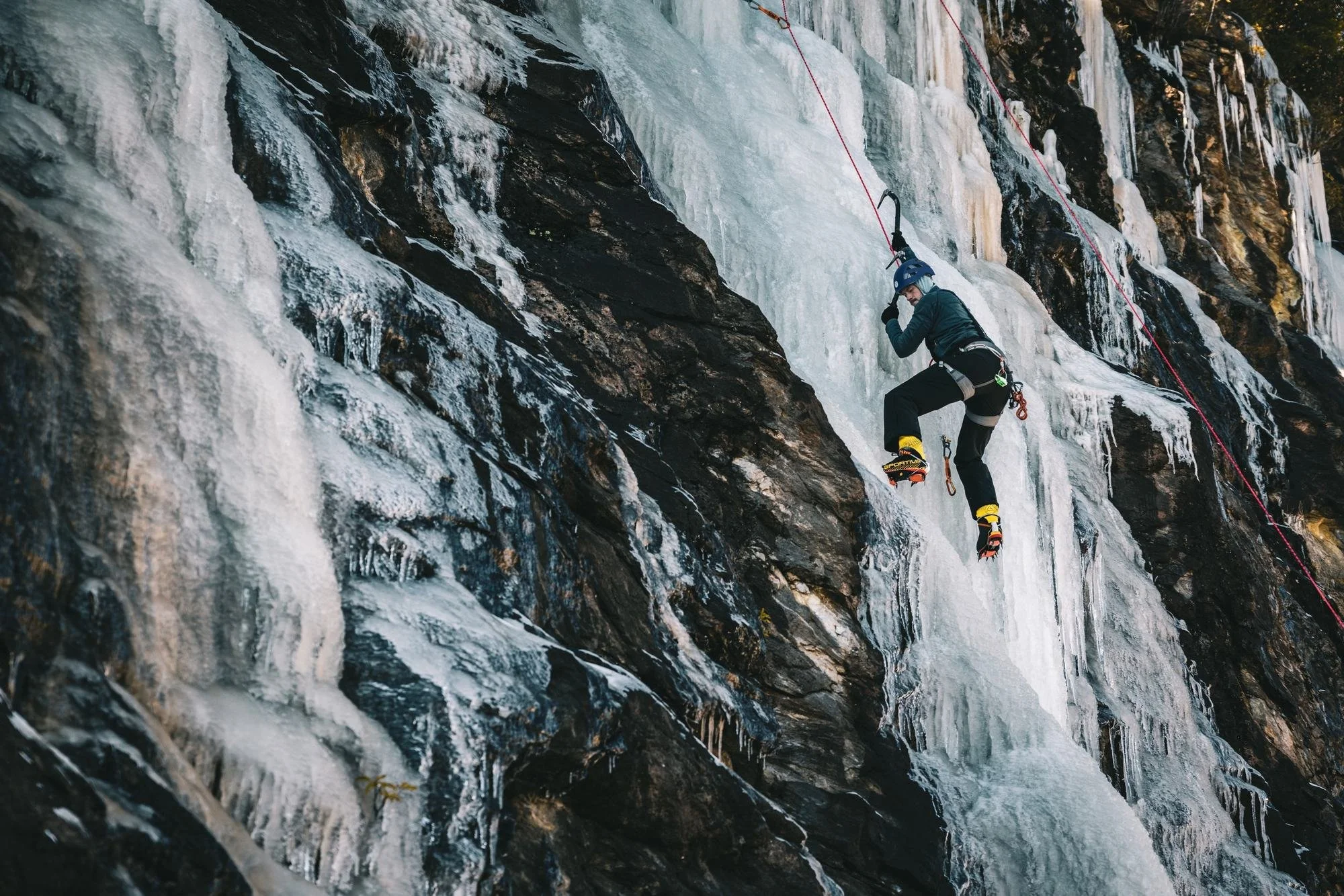
Yes, North Carolina has real ice
Every winter someone asks us the same question: can you actually ice climb in North Carolina? The answer is yes, when the mountains cooperate. During a hard cold snap, waterfalls and seeps across Western North Carolina lock up into climbable ice, from roadside top-ropes off Highway 215 to a nearly 2,000-foot gully in the Black Mountains.
I’ve been guiding in these mountains since 2006, and NC ice is still one of my favorite things about living here. It’s also the most fickle climbing we have. This guide covers where the ice forms, how to tell when it’s in, what you need to get started, and where to go when the Southeast just won’t freeze.
Karsten Delap, IFMGA Mountain Guide and co-owner, Pisgah Climbing School
Why Southern ice is special, and fickle
NC ice exists because of elevation. The best lines sit between roughly 4,000 and 6,000 feet, where winter nights regularly drop into the teens. Down in the valleys, the same water just runs.
The catch is consistency. We don’t get months of steady cold like New England. We get cold snaps, a few days to a couple of weeks of hard freezing, followed by a warm, rainy front that can strip a route in an afternoon. Some seasons give us weeks of good climbing. Some give us only a few dispersed days.
That makes NC ice a game of timing. Thin ice, hollow pillars and running water behind the surface are common. It’s real climbing, but it rewards local knowledge and conservative judgment more than almost anywhere else.
Where the ice forms in Western North Carolina
These are the areas we guide most when conditions line up. All of them are within a couple of hours of our shop in Pisgah Forest.
Highway 215 roadside ice
Short flows right off the road near the Parkway. The easiest access in the state.
Best for: first-timers and Ice 101 days
Sam’s Knob
Moderate ice with some multi-pitch options. A short bushwhack through rhododendron (“rhodeneering”) to get there.
Best for: building mileage and first multi-pitch ice
Graveyard Fields
High-elevation flows right off the Blue Ridge Parkway.
Best for: moderate top-roping when the Parkway is closed
Whiteside Mountain
Easy moderates up to hard WI5 and mixed lines, including the classic WI3 Starshine.
Best for: beginners through experienced leaders
Celo Knob and Left Wishbone (Black Mountains)
Nearly 2,000 feet of gully climbing with WI3 steps, one of the longest ice routes in the East.
Best for: long days and training for bigger ranges
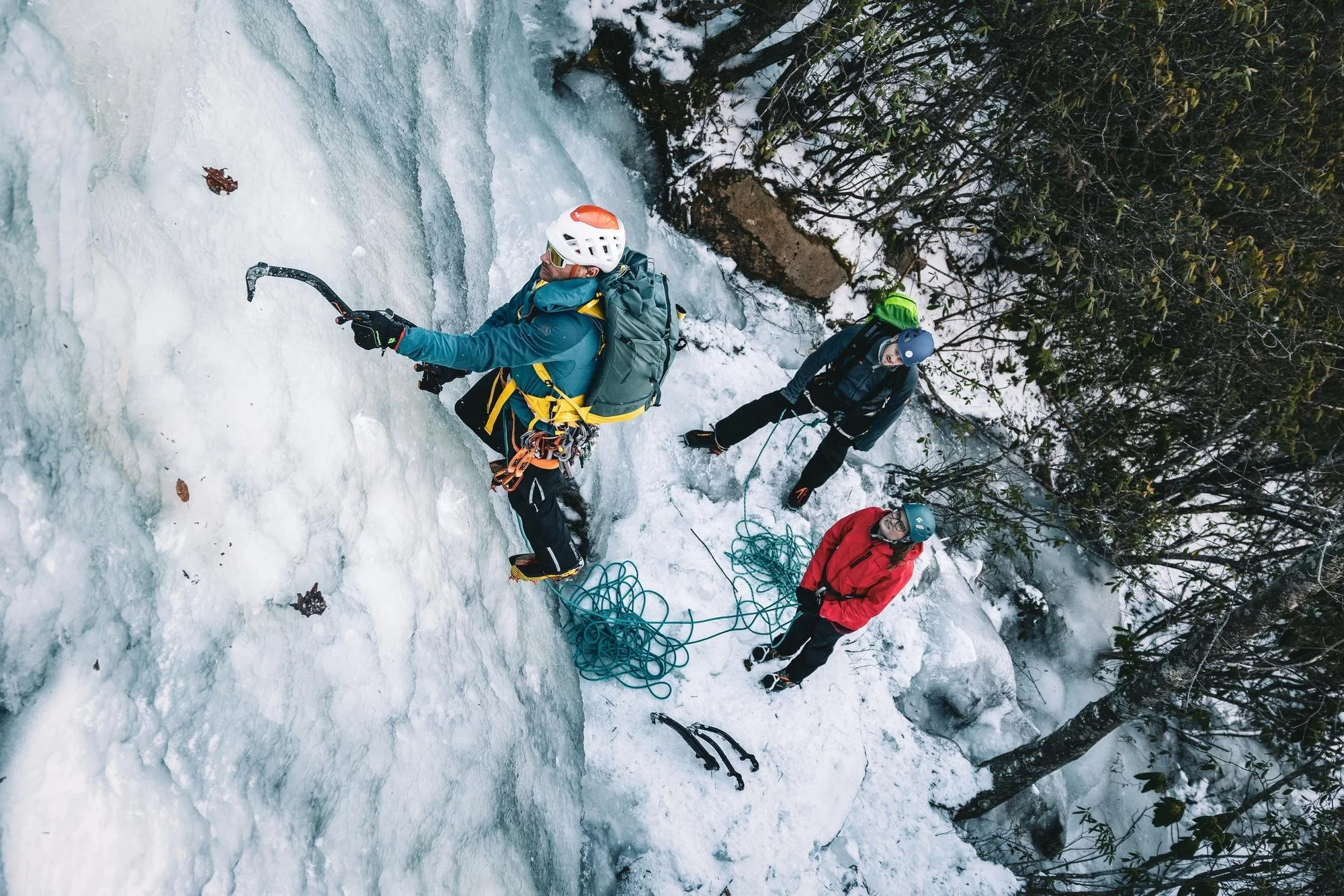
A note on access. Much of the high ice sits on or near Blue Ridge Parkway land. Parkway rules prohibit ice climbing within 100 feet of an established trail, or within 50 feet of a road that’s open to traffic, and ban crossing frozen lakes or waterways to reach a climb. Ice climbing on the Parkway’s closed roads and parking areas is allowed (NPS Blue Ridge Parkway compendium). Rules change, so check before you go, or climb with a permitted guide service that tracks it for you.
When to go and how to read conditions
Our ice window usually runs from late December through February, with January the most reliable. But the calendar matters less than the forecast. We have climbed ice in early November as well as late March!
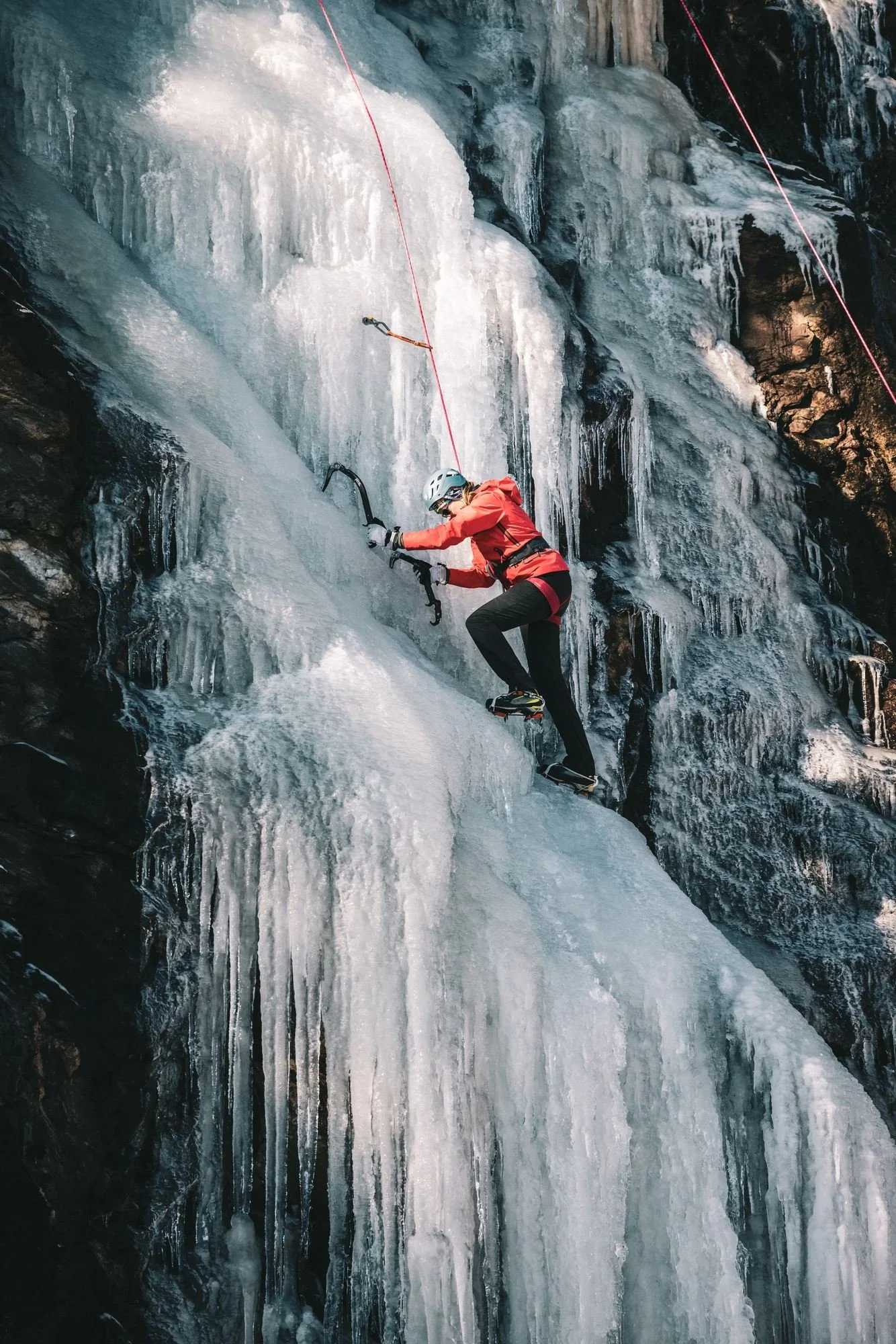
What we look for before calling a day:
• Several consecutive days with highs below freezing at the climb’s elevation, not in town.
• Nights in the teens or colder. That’s what builds ice fast.
• No warm rain in the forecast. One soaking front can undo a week of freezing.
• Clean, well-bonded ice. White, airy, hollow-sounding ice or audible running water are reasons to back off.
The Blue Ridge Parkway also closes sections in winter weather, which can change your approach entirely. Check the NPS Parkway road status the night before.
The easiest way to know? Call us. We track conditions all season and can tell you what’s actually in: (828) 222-ROPE.
Gear and skills: how to get started
You don’t need any ice experience to start, and you don’t need to own the gear. On a guided day we can provide the technical kit:
• Two technical ice tools
• Crampons that fit your boots
• Mountaineering boots
• Harness and helmet
Boots can make or break an ice day, and we keep what’s likely the largest mountaineering boot fleet available to guests. That means a real range of sizes and models to get your fit dialed, not whatever’s left on the shelf. You bring warm layers, waterproof gloves (two or three pairs), a shell, a backpack, and food and water for an eight-hour day.
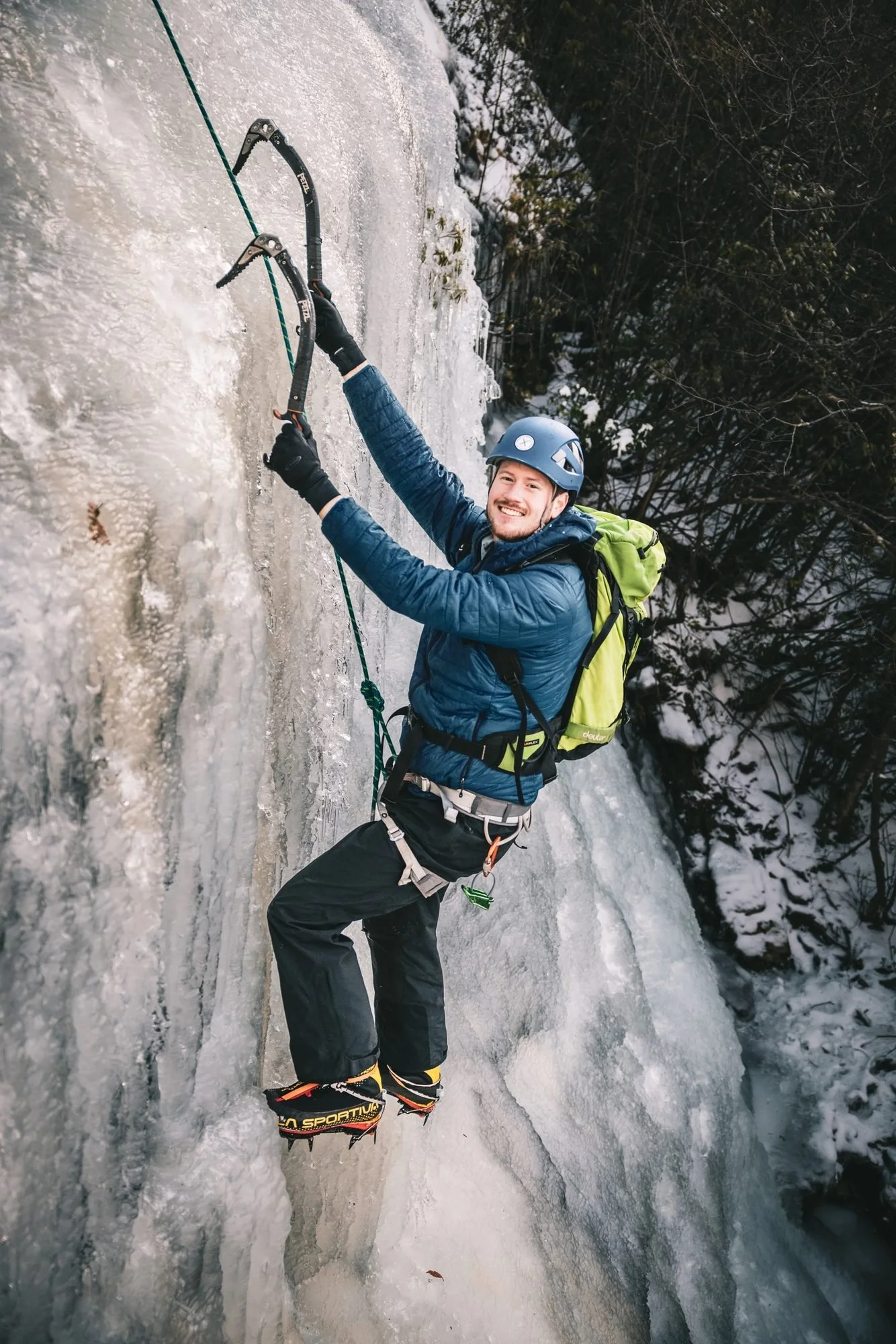
If you rock climb, a lot transfers: footwork, belaying, rope systems. What’s new is swinging tools, kicking crampons, and reading ice. Our Ice 101 course covers exactly that: movement, tool and crampon technique, and how to judge ice quality, all on top-rope.
One honest note: because NC conditions are hit or miss, local ice days are booked on short notice when it’s in. If you want guaranteed ice on a fixed date, that’s what New Hampshire is for.
When NC won’t freeze: come climb with us in New Hampshire
Every winter we take a crew north to New Hampshire’s Mount Washington Valley, based out of North Conway. It’s the best way to get consistent ice without guessing at the forecast.
Why New Hampshire:
• Reliable ice. Cold arrives in December and usually holds into March. You can book a date months out and expect to climb.
• Short approaches. Classic crags like Frankenstein Cliff and Cathedral Ledge are minutes from the car with minimal avalanche hazard, so you spend the day climbing, not hiking or worrying about the snowpack.
• Every level in one place. Low-angle slabs for first-timers, steep pillars and multi-pitch lines for experienced climbers, and alpine gullies for people training for bigger mountains.
• Same guides you know. You climb with PCS guides, including me, at small guide-to-climber ratios.
“Pure adrenaline rush climbing with those guides. We ice climbed in NH, our second year here and overall our 6th trip with Pisgah. Will come back next year. This says it all!”
Alon V., Ice & Alpine Climbing, January 2026
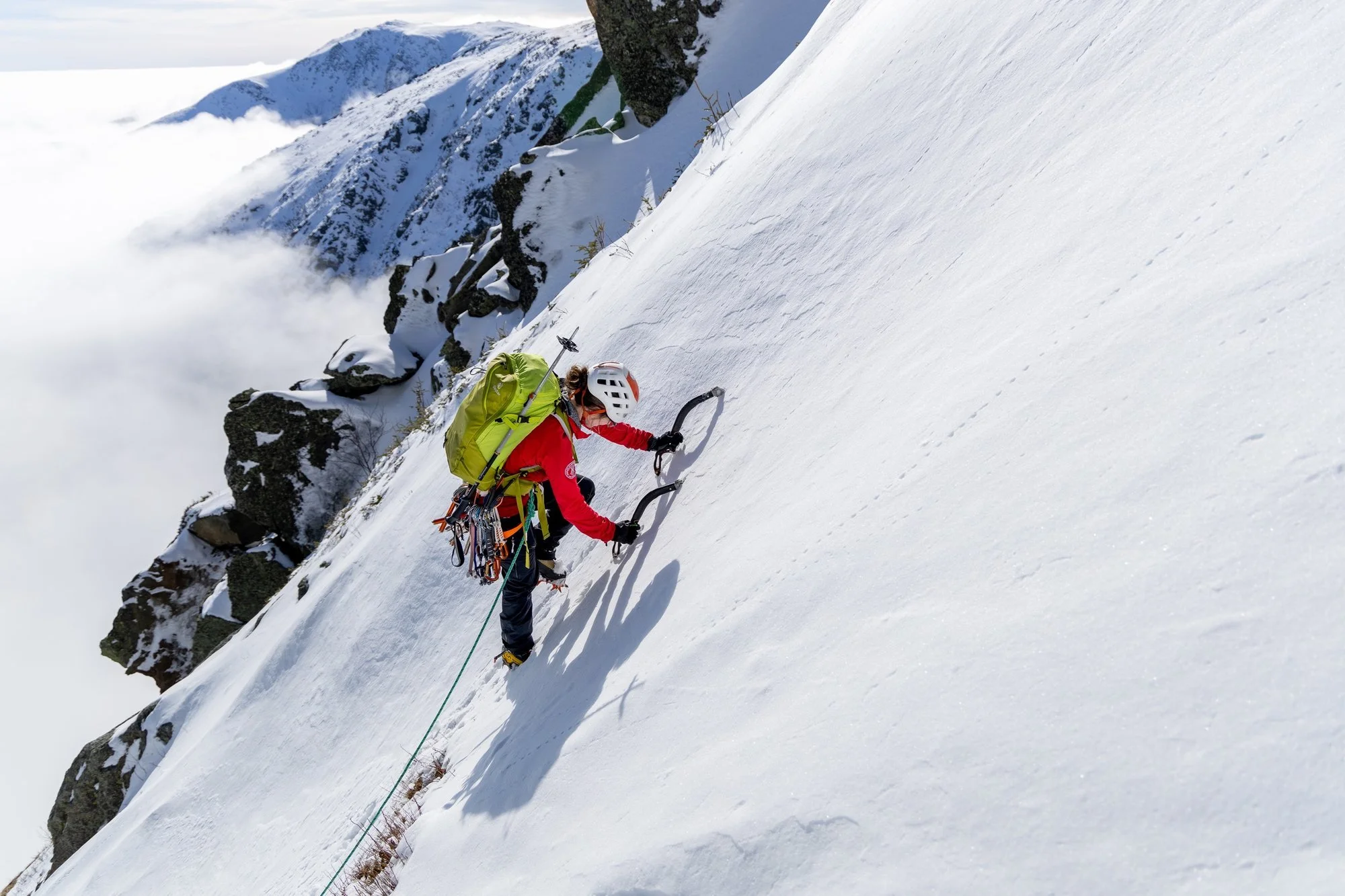
The trip is a natural next step after a day or two of NC ice, or a great first ice trip on its own. It’s also solid training for objectives like Mt. Baker, which we guide too.
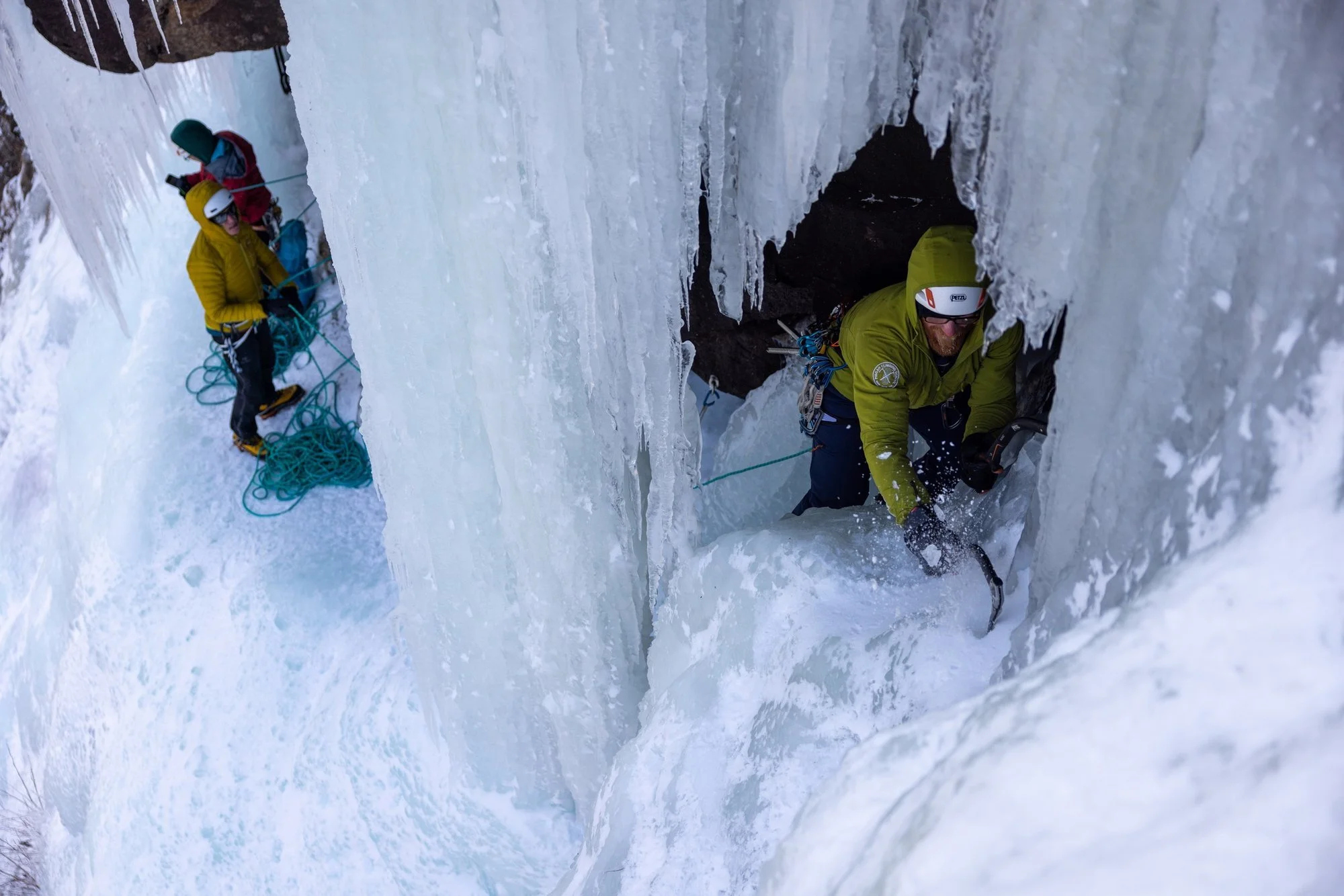
Trip at a glance: Ice 101 in New Hampshire
• Dates: January 30–31, 2027
• Base: North Conway, NH
• Experience needed: None, built for first-time ice climbers
• Gear: Technical gear and mountaineering boots provided
Reserve your spot on the New Hampshire ice trip. Questions? Call (828) 222-ROPE or email info@pisgahclimbingschool.com.
Frequently asked questions
Can you ice climb in North Carolina?
Yes. During cold snaps, waterfalls and seeps at high elevation in Western NC freeze into climbable ice. Conditions are inconsistent, so timing and local knowledge matter.
When is ice climbing season in North Carolina?
Usually late December through February, with January the most reliable. It depends on multi-day stretches below freezing at elevation.
Where can you ice climb near Asheville?
Popular areas include the Highway 215 roadside ice, Sam’s Knob, Graveyard Fields, Whiteside Mountain and the Black Mountains. All are within about two hours of Asheville.
Do I need experience to go ice climbing?
No. Our Ice 101 course is built for first-timers, and rock climbing experience helps but isn’t required. We provide the technical gear.
Is ice climbing allowed on the Blue Ridge Parkway?
In many places, yes, with restrictions. Climbing isn’t allowed within 100 feet of an established trail or 50 feet of an open road, and you can’t cross frozen lakes or waterways to reach a climb.
What if there’s no ice in North Carolina this winter?
Join our guided New Hampshire ice trip. North Conway has reliable ice from roughly December through March and climbing for every level.