
Rock Climbing for Beginners in North Carolina: What to Expect on Your First Day Outside
By Karsten Delap, IFMGA Mountain Guide | Pisgah Climbing School
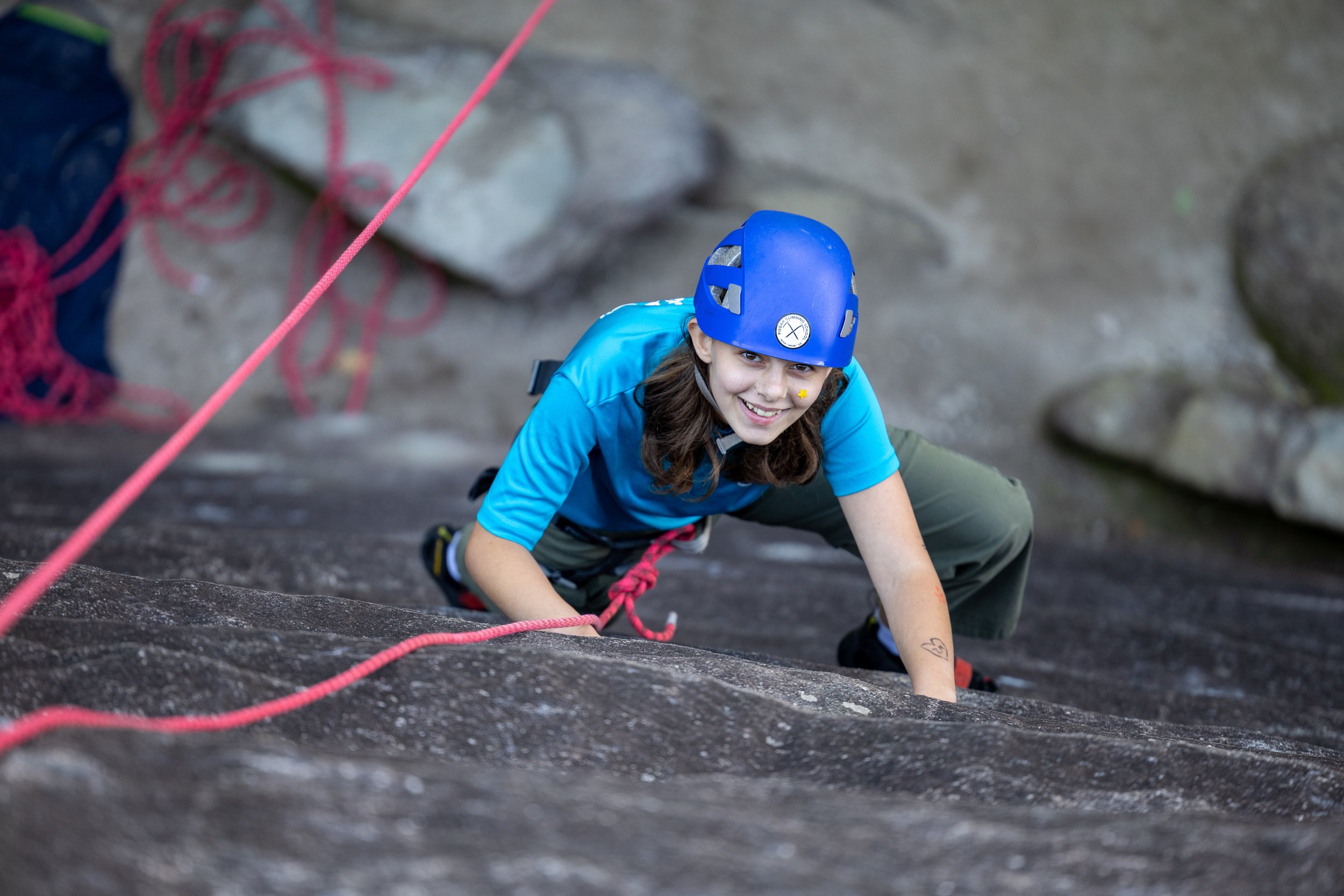
First time climber exploring on Looking Glass.
If you've ever stood at the base of a cliff and thought, "I want to do that, but I have no idea where to start" — this post is for you.
Every year, hundreds of first-time climbers head into the mountains of Western North Carolina with little more than curiosity and a sense of adventure. Some have climbed indoors. Some have never touched a rope. What they all share is the same question: what does a first day of outdoor rock climbing actually look like?
At Pisgah Climbing School, we've introduced thousands of people to the sport. Here's an honest, complete answer.
Is Outdoor Rock Climbing Safe for Beginners?
Yes — when you're with a qualified guide.
Outdoor climbing carries real risk, but that risk is highly manageable with proper instruction and certified leadership. When you book a guided beginner experience with a reputable school, your guide handles every safety-critical decision: gear inspection, anchor building, belay setup, and route selection. Your only job is to climb.
What makes Pisgah Climbing School different is the credential behind your guide. As the only IFMGA Mountain Guide in the Southeastern United States, Karsten Delap holds the highest internationally recognized certification in the profession. This isn't just a title — it means decades of training, tested judgment, and a deep commitment to bringing people into the mountains safely. This professionalism is passed down through all of the instructors and guides at PCS and, intern provides amazing days for all guests at the highest standards.
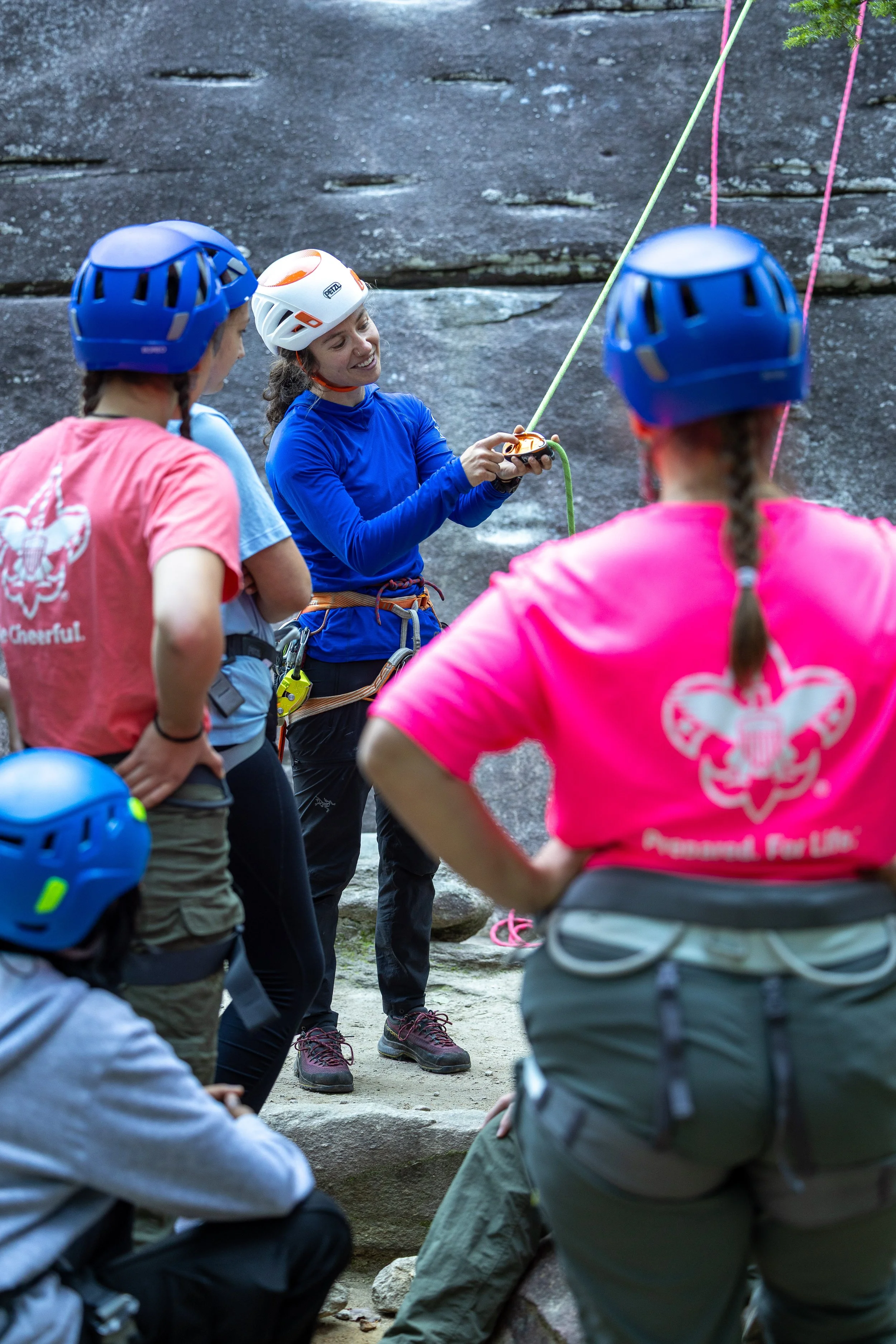
PCS instructor Anna Marie teaching some scouts about belaying.
What Happens on a Beginner Guided Climb in NC?
Here's a typical day with Pisgah Climbing School for a first-timer:
1. The Meeting & Gear Check
You'll meet your guide at a trailhead or the office near Brevard, NC — typically for an approach to Looking Glass Rock, Cedar Rock, or another world-class crag in the Pisgah National Forest. Your guide provides all technical climbing gear: harness, helmet, belay device, and rope. You bring water, snacks, and weather-appropriate clothing.
2. The Approach
A short hike brings you to the base of the route. Along the way, your guide will start reading you — your fitness level, your comfort with exposure, your goals for the day. This shapes everything that follows.
3. Ground School
Before you leave the ground, you'll learn the fundamentals: how to put on your harness, basic movement principles, how communication works on a climb, and what the rope system is doing for you. There's no rush. Questions are welcomed.
4. Your First Climb
Your guide sets the top rope. You tie in. And then you climb. Routes are chosen specifically for your ability — comfortable enough to build confidence, challenging enough to feel real. Most beginners are surprised by how much they accomplish on day one.
5. Progression
A full day typically includes multiple routes. As your comfort grows, your guide introduces new terrain, new techniques, and new challenges. By the end of the day, most first-timers have climbed routes they never thought possible.
What Gear Do You Need as a Beginner?
Nothing technical. All climbing equipment is provided by Pisgah Climbing School.
What you should bring:
- Sturdy, closed-toe shoes (approach shoes or trail runners work great; avoid sandals)
- Comfortable, flexible clothing you can move in
- Plenty of water — a full liter per hour of climbing is a good baseline
- Snacks or a lunch depending on trip length
- Sunscreen and layers — conditions in the Blue Ridge can change quickly
- A small daypack to carry your gear to the crag
Where Do Beginners Climb in the Pisgah Area?
Western North Carolina is home to some of the best beginner-friendly outdoor climbing on the East Coast. The Blue Ridge Mountains offer ancient granite and gneiss — forgiving rock that rewards technique over brute strength.
Looking Glass Rock is the crown jewel. A massive granite dome rising above the Pisgah National Forest near Brevard, it offers routes for every ability level, from gentle slabs perfect for first-timers to demanding multi-pitch lines for experienced climbers. Views from the top are extraordinary.
Cedar Rock offers superb face climbing with a variety of difficulty levels — an excellent venue for beginners who want to build movement skills on technical terrain.
Rumbling Bald near Lake Lure provides accessible crags with a wide range of single-pitch routes, making it ideal for groups and first-time experiences.
Linville Gorge is a great area for longer easy multi-pitch climbs that you can start to get that alpine feel.
Moore’s Wall and Pilot Rock are some farther east climbing areas that offer great bigger routes for learning and adventure.
All of these areas are within Pisgah Climbing School's guiding territory, and your guide will choose the right venue for your goals and the day's conditions.
---
Do I Need Prior Experience?
No. Zero.
We guide complete beginners every week. You do not need to have climbed indoors, trained at a gym, or have any prior exposure to the sport. If you can hike to the base of a cliff, we can teach you to climb.
That said, if you have climbed in a gym, outdoor climbing will feel different — in the best way. Real rock has texture, variability, and character that gym holds can't replicate. Your guide will help you translate your indoor skills to the real world.
---
How Do I Book a Beginner Climbing Experience?
Visit [pisgahclimbingschool.com](https://pisgahclimbingschool.com) to browse available dates and programs. We offer:
- Private guided day trips — one-on-one or small group experiences tailored entirely to your goals
- Introduction to Rock Climbing courses — structured curriculum for those who want to build toward independence
- Multi-day experiences — for those ready to go deeper
Private trips fill quickly, especially on weekends. Book in advance.
Why Choose Pisgah Climbing School?
There are several guide services operating in Western North Carolina. Here's what sets PCS apart:
- The Southeast's only IFMGA Mountain Guide leading and overseeing your instruction
- The largest guide service in the Southeast — with the depth of a full team of dedicated, passionate guides
- Intentional culture — every trip, every client, every interaction is deliberate. We don't do cookie-cutter experiences.
- AMGA-certified-instructors — the gold standard for climbing education in the United States
- A track record of transformation — from first-timers to aspiring guides, we've helped thousands of climbers find their footing in the mountains
Climbing changed our lives. We show up every day to share that with you.
Frequently Asked Questions
How fit do I need to be to try rock climbing?
A basic level of fitness helps, but climbing is far more about technique and mental engagement than raw strength. Beginners of all fitness levels have successful first experiences with us.
What's the age range for beginners?
We guide climbers from children to seniors. There is no upper age limit. Minimum age for most programs is 6 years old but we have worked with many adventurous children that are 4 years old.
How long is a typical beginner day?
Most guided day trips run 5–8 hours including the approach, instruction, climbing, and return hike.
Is rock climbing scary?
It can feel intimidating — that's part of what makes it meaningful. Your guide is trained to help you manage fear and build confidence at exactly the right pace. You will never be pushed beyond what's right for you.
What if the weather is bad?
Safety is always the priority. Your guide will monitor weather closely and make the call. In the event of dangerous conditions, we reschedule.
Ready to take the first step?
[Book your beginner climbing experience at Pisgah Climbing School →](https://pisgahclimbingschool.com)
Karsten Delap is an IFMGA Mountain Guide, the 159th American to earn the certification. He is the founder of Pisgah Climbing School and has been guiding and teaching climbing for over 20 years across North America, South America, Africa, and the Himalayas.