
The Nose of Looking Glass Rock
Pisgah Climbing School · Route Guide · Brevard, NC
The Nose of Looking Glass Rock
If you're going to climb one route in North Carolina, make it The Nose of Looking Glass Rock. Sitting just a few miles from our school in Brevard and about ten minutes from our office, this nearly 400-foot granite monolith in Pisgah National Forest is arguably the most iconic trad climb in the Southeast. It rises from a sea of granite "eyebrows," with sweeping views of the Blue Ridge Parkway and the Appalachian Mountains in every direction.
At Pisgah Climbing School, The Nose is one of our most requested guided objectives — and for good reason. Whether you're a visiting climber checking off a bucket-list route or a local looking to lead it for the first time, we know this wall intimately. You can find it on our Looking Glass Rock page.
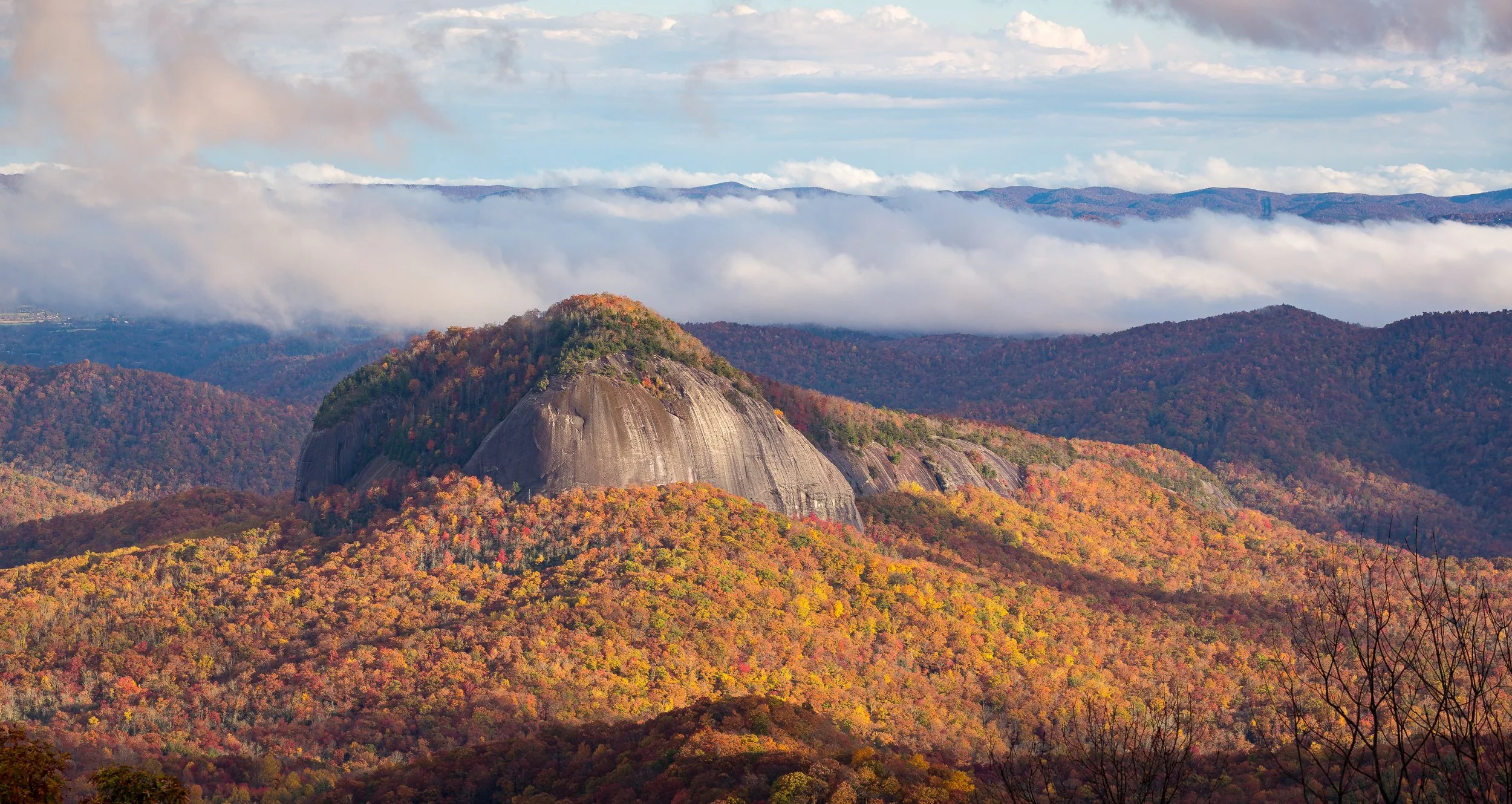
Looking Glass sitting in a sea of fall colors. Photo: Karsten Delap Photography
A brief history
The first ascent of The Nose was completed on December 19, 1966, by Steve Longenecker, Robert Gillespie, and Bob Watts — a landmark moment for climbing in North Carolina and the entire Southeast. The three climbers wore stiff-soled leather boots and carried a rack of pitons, having already tried and failed on several routes on the north side. When they committed to what is now the Nose Area (with no established trail to the base at the time), they worked their way up ground-up, pulling on a single piton for aid at one critical section. That made the first ascent technically an aid climb — and launched a legacy that has drawn climbers from around the world ever since.
Today The Nose has been free soloed, and the fastest known time sits at just over 8 minutes — a long way from that cold December day in 1966.
The climbing
The Nose is rated 5.8 and climbed in four pitches, making it accessible to intermediate trad climbers while still delivering a genuine alpine experience. Most parties take 2 to 4 hours car-to-car. The climbing style is uniquely technical: the famous granite "eyebrows" — horizontally-layered flakes that jut from the face — require a delicate step-up, convert-to-undercling rhythm you won't find anywhere else. It's not hard, but it demands attention and commitment on every pitch.
Looking Glass Rock is a pluton monolith dome composed of Whitesides granite. The rock takes cams exceptionally well, and the eyebrow features are perfectly suited to modern trad protection.
Pisgah Climbing School's own Karsten Delap has climbed The Nose over 200 times — more than any other person on record. When you climb with us, you're getting beta straight from the person who knows this route better than anyone alive.That's the kind of local knowledge you can't find in a guidebook.
Best seasons
Spring and fall are ideal. Summer climbing is possible with an early start — The Nose faces WNW, staying shaded in the morning with afternoon sun. Watch for afternoon thunderstorms in summer, which are common but usually visible well in advance from the route. Note that the gate on FR 475B is often closed in winter, adding roughly a mile (15–20 min) to the approach.
Rack recommendation
For a well-protected ascent, bring a single set of cams from 0.3 to 3 (Black Diamond sizing) with doubles from 0.4 to 1. Doubles in the .4–.75 range are the workhorse sizes; add triples in that range plus a #1 and you can sew up every pitch. TCUs, tri-cams, and plenty of long runners round out the kit.
Need to gear up before your trip? Both local shops below carry climbing gear and can help you dial in your rack.
Approach
The trailhead is at Gumstand Gap along Headwaters Road (FR 475B) at the Sunwall Trail. Coordinates: 35°18'36.7"N, 82°48'00.0"W. From the parking lot, take the signed trail south of the kiosk — not the public trail immediately to its right. It's a half-mile hike with roughly 360 feet of elevation gain. Once at the base, you'll be near the start of Sundial Crack; follow the base of the rock about 100 feet north to an obvious eroded area at the start of The Nose.
Descent options
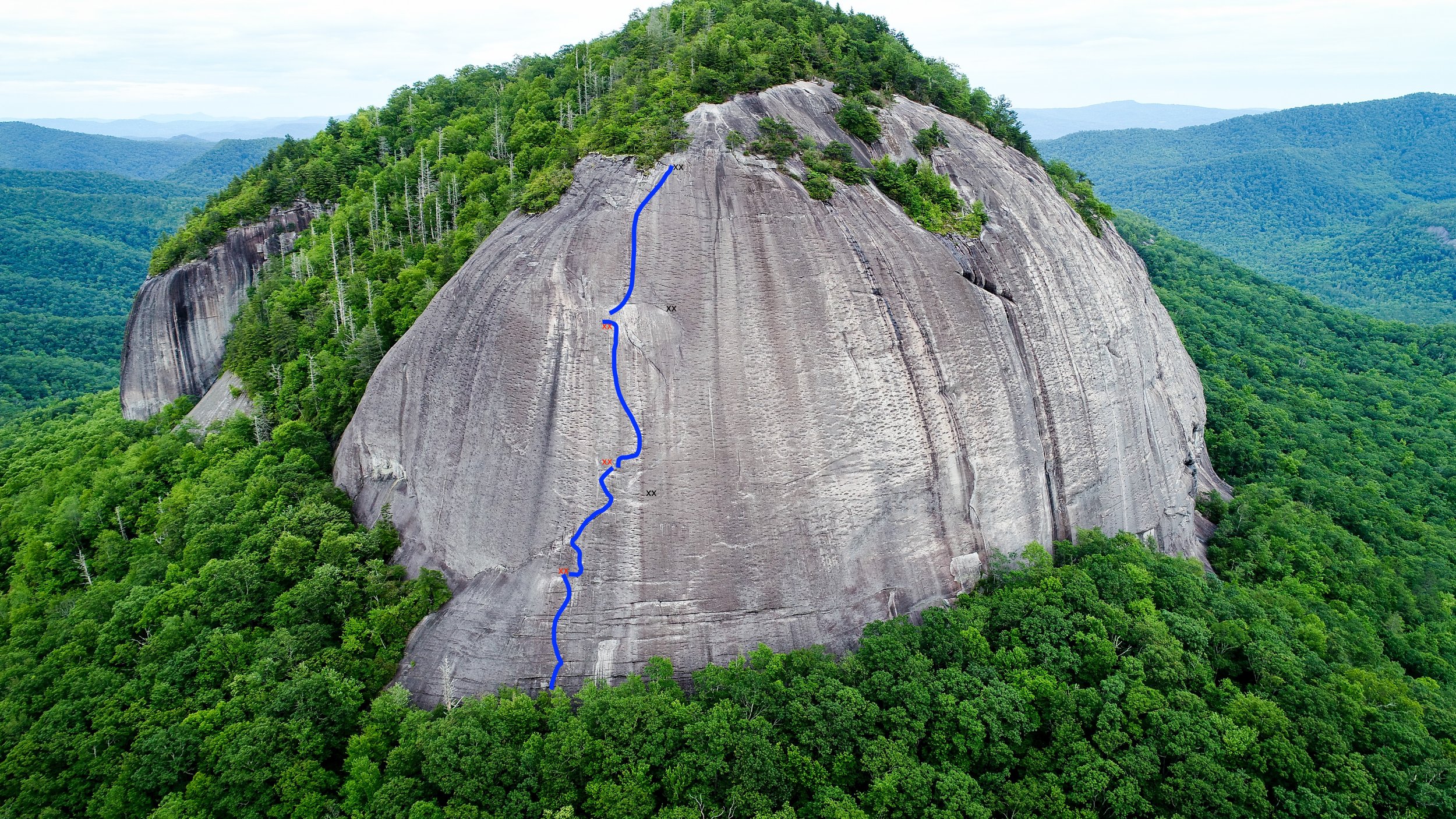
Topo of the Nose route on Looking Glass
Where to stay
Both of these are excellent home bases for a climbing trip to the Pisgah area, just minutes from Looking Glass Rock.
Lodging
Foggy Bottom Cabins
Cozy, well-appointed cabins in Pisgah Forest with full kitchens and modern amenities. Perfectly located for early morning approaches. Rated 5.0 by over 100 guests.
+1 828-435-2460Lodging
Pilot Cove
Treehouse-style cabins at the entrance to Pisgah National Forest, within minutes of Looking Glass, Sliding Rock, and Looking Glass Falls. Great for families and groups.
+1 866-758-2683Where to get gear
Gear shop
The Hub
Located at the gateway to Pisgah Forest, The Hub carries outdoor gear and is a full-service bike shop with a tap room. An essential stop before or after a day on the rock.
+1 828-884-8670Gear shop
D.D. Bullwinkle's Outdoors
A beloved Brevard institution on Main Street carrying top outdoor brands across two floors, including a tap room. Knowledgeable staff and a great selection for climbers.
+1 828-862-4700Frequently asked questions
Is The Nose appropriate for beginner trad climbers?
The Nose is best suited for climbers comfortable leading moderate trad routes and building anchors independently. The eyebrow technique is unusual — if you haven't climbed on Looking Glass granite before, a guided ascent with Pisgah Climbing School is a great way to get acquainted with the style.
Does Pisgah Climbing School guide The Nose?
Yes — The Nose is one of our most popular guided objectives. We offer guided ascents for parties of varying experience levels. Get in touch to discuss your goals and we'll put together the right plan.
Are there peregrine falcon closures to be aware of?
The North Face of Looking Glass is subject to seasonal peregrine falcon closures. Always check the Carolina Climbers Coalition closures page before heading out. The Nose Area is on the opposite side of the rock, but it's worth confirming current access before any trip.
How many routes are on Looking Glass Rock?
There are roughly 400 routes across the South Face, Sun Wall, Nose Area, and North Face — ranging from single-pitch 5.6 slabs to Grade IV and V aid lines reminiscent of Yosemite.
Can I hike to the top without climbing?
Yes. The Looking Glass Rock Trail is a 4.9-mile round-trip hike through Pisgah National Forest leading to the summit. It's a popular moderate trail with outstanding views of the Blue Ridge.
Ready to climb The Nose? Pisgah Climbing School guides ascents for all experience levels — we know every pitch.
Book a guided ascent →