
The AMGA Single Pitch Instructor Course: What to Expect, Who It's For, and What Comes Next
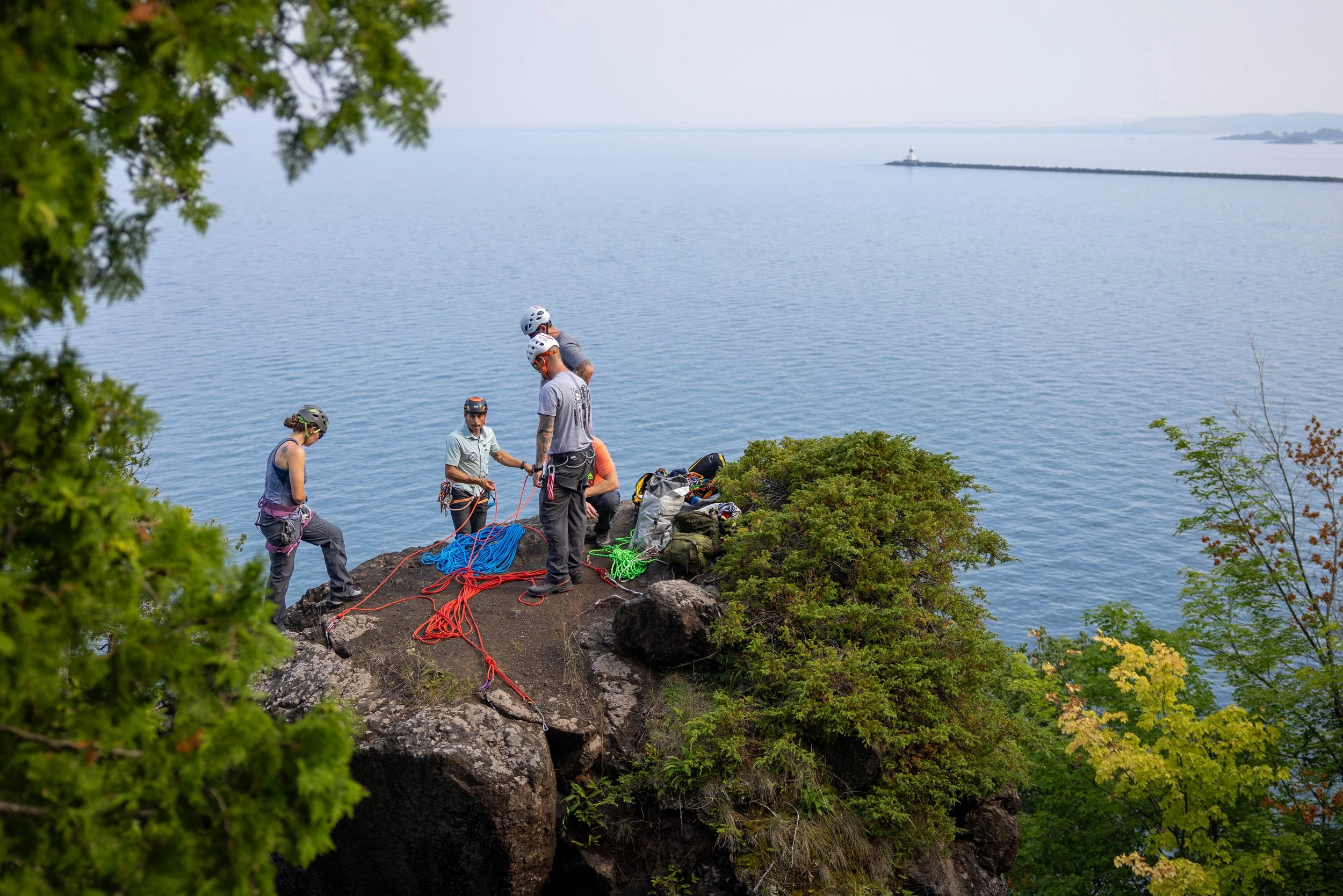
Karsten teaching the SPI in the Upper Peninsula of Michigan.
Pisgah Climbing School · AMGA Guide · Career Development
The AMGA Single Pitch Instructor Course: What to Expect, Who It's For, and What Comes Next
I've been running AMGA Single Pitch Instructor courses since 2009 — long enough to have watched the program evolve from its earlier incarnation as the "AMGA Top Rope Site Manager" into the internationally recognized SPI credential it is today. I've seen the program from every angle: as someone who worked through the full AMGA progression to IFMGA certification, as a course provider for over fifteen years, and as the founder of a guide service where the SPI is part of our professional development pipeline. I'm going to give you the honest picture that most course listings won't: what the SPI actually is, what it isn't, who should take it, and what comes next.
What is the AMGA SPI?
The AMGA Single Pitch Instructor program grew out of the earlier AMGA Top Rope Site Manager program and was formalized under its current name in 2008, when it was also endorsed by the UIAA as the only internationally recognized certification for single-pitch climbing instruction in the United States. The course runs 27 hours over three days. The exam — which is a separate event — is a minimum of 16 hours over two days.
What it covers: technical skills for managing a single pitch site, teaching techniques, risk management, group and site organization, Leave No Trace principles, and basic rescue. What it doesn't cover: multi-pitch terrain, leading on committing routes above single pitch, alpine or glacier travel, or the full scope of independent guiding. The SPI was designed to train instructors to work in a single pitch environment — and it does that well.
Straight from the SPI Provider's desk
The SPI was never designed to be a standalone credential for running an independent guiding operation. It was designed to prepare instructors to work under the supervision of higher-level guides. That context matters — especially if full-time guiding is your goal. The SPI is a step, not the summit. I say this not to discourage, but to help you plan your path realistically from day one.
Who should take the SPI?
The SPI is a strong fit if you want to work as a climbing instructor at a guide service, camp, school, university, or gym with an outdoor program. It's also a great choice if you want to take friends and family out climbing at a professional standard — or if you're serious about guiding and want to start the AMGA progression correctly.
It is not the right choice if you're hoping it will immediately qualify you to run your own fully independent guide service on complex terrain. For that, you need to continue up the AMGA pathway — which involves multiple courses and assessments at each discipline level before achieving full certification.
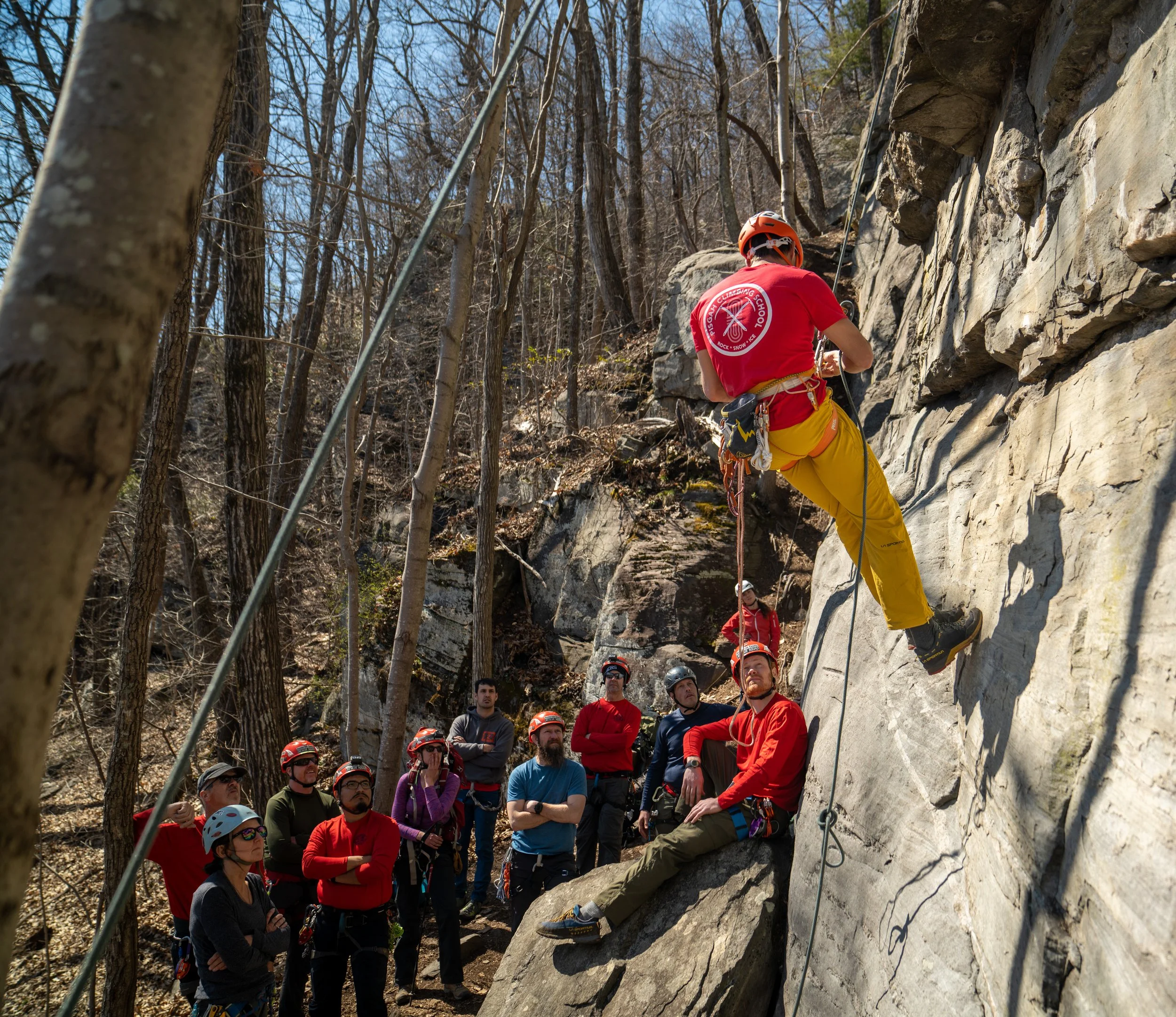
Karsten teaching the single pitch pick off.
Who teaches the SPI at Pisgah Climbing School
At PCS, you won't just be learning from a standard SPI provider. Our programs are run by three of the most credentialed climbing instructors in the Southeast — each having gone well beyond the SPI level themselves.
Karsten Delap
IFMGA Mountain Guide
The 159th American to earn IFMGA certification and the only IFMGA guide in the Southeast. SPI provider since 2009.
Sam Jury
AMGA Certified Rock Guide
Holds full AMGA Rock Guide certification — completing the Rock Guide Course, Advanced Rock Guide Course, and Rock Guide Exam.
Anna Marie Alewine
AMGA Multi Pitch Instructor
AMGA MPI certification with experience from Looking Glass to Patagonia. SPI certification is a prerequisite for the MPI — Anna Marie has built on that foundation extensively.
The credential level of your provider matters more than most candidates realize. When you learn from guides who have gone far beyond the SPI, you gain perspective on how these skills fit into a full guiding career — not just how to pass the exam.
Prerequisites — and what they actually mean
The official prerequisites are the floor, not the target. Most candidates I see who struggle on the course or exam meet the minimums but don't exceed them. Here's what the AMGA requires — and what I'd actually recommend:
The most common reason candidates struggle
Knots. Every single course, there are candidates who haven't practiced their knots enough and it shows on day one. Figure eights, overhands (follow-through and on a bight), bowline family, munter hitch and munter mule, clove hitch, double fisherman's, prussik and klemheist. Know these cold before you arrive — not "I can tie them slowly," but cold, under pressure, without hesitation. Practice every day for a month before your course.
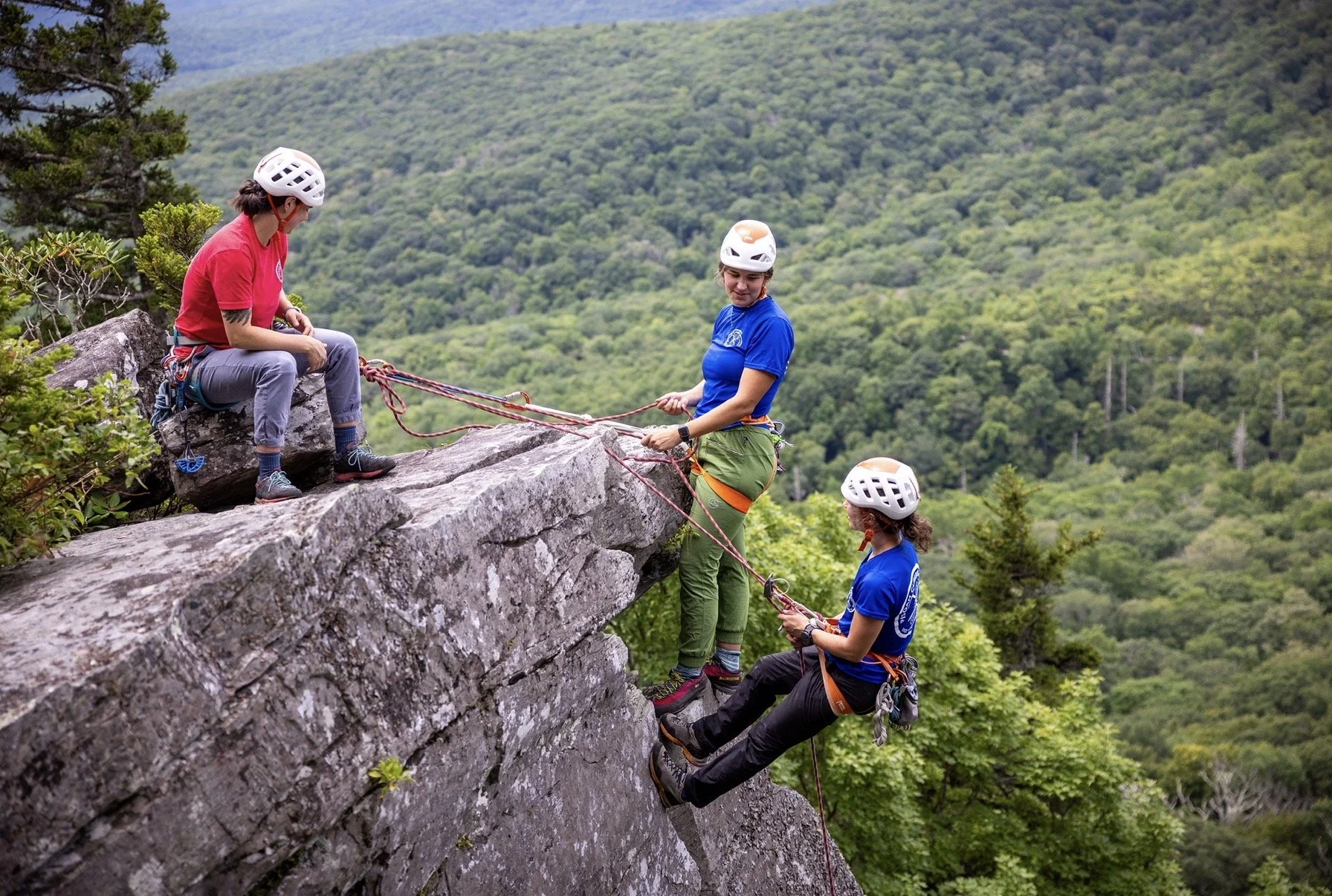
Anna Marie facilitating working from the top of the cliff for a great client experience.
What the course actually covers
Three days of intensive field work. Day one typically covers equipment, knots and hitches, belaying systems, and protection placement. Day two moves into anchor building, top rope setup, and instructional technique. Day three focuses on site management, group dynamics, rescue systems, and teaching delivery. You'll be evaluated on your ability to do these things — and to teach them to a novice.
That last part is what catches people off guard. The SPI isn't just a technical climbing course — it's an instructor training program. You need to demonstrate that you can explain what you're doing, manage a group safely, and make sound decisions under uncertainty. Technical skill alone won't get you through the exam.
Course vs. exam — understanding the difference
The course and the exam are separate events. Completing the course does not certify you — it trains you. You then take the exam (minimum 16 hours over two days) to earn certification. We recommend giving yourself a couple of months to a full season of practice before sitting the assessment. The skills need to feel automatic, not deliberate.
The exam covers four evaluation areas: climbing movement, technical skills, teaching ability, and group management. You'll also be asked to deliver a structured 15-minute lesson on a relevant topic — prepare one in advance.
My honest advice on timing
A couple of months at minimum, a full season ideally. Take the course, go back to the crag, and practice until the skills are second nature. Candidates who pass on the first attempt are almost always the ones who gave themselves enough runway after the course. Don't rush it.
The full AMGA pathway — what the road really looks like
This is where most blogs get it wrong. The AMGA certification pathway is not a single course at each level — it involves multiple courses and a final exam or assessment at each discipline. The rock discipline alone requires three sequential steps before full certification. The alpine and ski disciplines are similarly demanding, and both require an AAA-approved professional level 2 avalanche certification as part of the pathway. Here's an honest overview:
AMGA Single Pitch Instructor (SPI)
Entry point into the AMGA pathway. Qualifies you to instruct in a single pitch environment under appropriate supervision. Valid for 3 years. SPI certification is also a prerequisite for the Multi Pitch Instructor credential — making it a required foundation regardless of which track you pursue next.
AMGA Certified Rock Guide
Full rock guide certification — the credential Sam Jury holds at PCS. Not a single course; requires completing all three steps in sequence:
→ Rock Guide Course
→ Advanced Rock Guide Course
→ Rock Guide Exam (final assessment)
AMGA Multi Pitch Instructor (MPI)
Technical multi-pitch instruction credential — the certification Anna Marie Alewine holds at PCS. SPI certification is a prerequisite for the MPI, so this credential builds directly on the foundation of step one. Covers multi-pitch systems, instruction, and site management above single pitch terrain.
AMGA Certified Alpine Guide
The alpine discipline involves even more courses than the rock track — glacier travel, mixed terrain, ice climbing, crevasse rescue, and advanced mountain systems. An AAA-approved professional level 2 avalanche certification is required as part of this discipline.
Requires: AAA Pro Level 2 Avalanche CertAMGA Certified Ski Mountaineering Guide
The third and final discipline required for IFMGA certification. Covers backcountry ski guiding, technical ski terrain, and advanced avalanche management across multiple courses before certification. Like the alpine discipline, an AAA-approved professional level 2 avalanche certification is required here as well.
Requires: AAA Pro Level 2 Avalanche CertIFMGA Mountain Guide Certification
The highest credential available to a mountain guide anywhere in the world — requiring full certification in all three disciplines: rock, alpine, and ski mountaineering. Karsten Delap was the 159th American to earn it. Today approximately 250 Americans hold IFMGA certification. He remains the only one operating in the Southeast.
What to do before your course
Frequently asked questions
Is the SPI worth it if I just want to take friends climbing?
Yes — if you're serious about it. The SPI will make you a significantly safer and more competent climbing leader regardless of whether you pursue guiding professionally. It's particularly valuable if you regularly introduce new people to climbing.
How hard is the SPI exam to pass?
Candidates who come prepared and give themselves enough practice time after the course have a strong pass rate. Examiners want candidates to succeed — but the exam does require genuine competence across all four evaluation areas. Rushing it is the most common mistake.
Do I need first aid certification before the course?
Not for the course or exam itself — but once certified and working, you'll need appropriate medical certification for the area where you're operating. Wilderness First Aid (WFA) is the minimum for most guide services; Wilderness First Responder (WFR) is preferred and often required.
How long does SPI certification last?
Three years, provided you maintain current AMGA membership and first aid certification. It can be renewed by taking another SPI exam or completing higher-level AMGA training.
Is the SPI a prerequisite for the Multi Pitch Instructor certification?
Yes — SPI certification is required before you can pursue the AMGA Multi Pitch Instructor (MPI) credential. This makes the SPI a foundational step not just for the rock guide track but for multiple pathways within the AMGA program. It's one of the reasons investing in a strong SPI experience pays dividends well beyond the certification itself.
Is the AMGA Rock Guide certification just one course?
No — and this is one of the most misunderstood things about the AMGA pathway. Full Rock Guide certification requires completing the Rock Guide Course, the Advanced Rock Guide Course, and passing the Rock Guide Exam. The alpine and ski disciplines have their own multi-course pathways as well, and both require an AAA-approved professional level 2 avalanche certification. The SPI is the beginning of a multi-year commitment if your goal is full AMGA or IFMGA certification.
Why do the alpine and ski disciplines require avalanche certification?
Both disciplines involve working in avalanche terrain — glaciers, couloirs, and backcountry ski routes where avalanche hazard is a serious and ever-present risk. An AAA-approved professional level 2 avalanche certification demonstrates that a guide can assess that risk and make sound decisions to keep clients safe. It is a non-negotiable requirement in both disciplines.
Can I take the SPI course and exam at Pisgah Climbing School?
Yes. We run SPI courses and exams in Pisgah National Forest near Brevard, NC. Visit our AMGA Programs page for current dates, or contact us at info@pisgahclimbingschool.com.
Interested in taking your SPI with our team in Pisgah National Forest? We'd love to work with you.
View SPI dates →